
Höre diesen Podcast kostenlos in der App: Kostenlos im App Store laden
radio.de
Sleeptimer
Sender speichern
The Dr. Phil Klein Dental Podcast
Dr. Phil Klein | Dentist
Neueste Episode
815 Episoden
Ep. 820 - The Evolving Understanding of Periodontal Disease
12.11.2026 | 17 Min.What if the way you've been explaining periodontal disease to your patients is only half the story — and that gap is quietly undermining their long-term outcomes?
This episode is hosted by Dr. Phil Klein, DMD, an endodontist and entrepreneur with over 40 years of experience spanning private practice, dental education, and the dental industry. Dr. Klein earned his Bachelor of Applied Science from the University of Pennsylvania College of Engineering, his DMD from Penn Dental, and his post-doctoral specialty certificate in Endodontics from Penn Dental in 1985. He holds three dental patents, founded Viva Learning LLC — now the largest dental continuing education entity in the world with over 460,000 dental professional users — and hosts a podcast that draws more than 30,000 listens per month.
In this episode, Dr. Klein delivers a focused clinical and scientific overview of how the understanding of periodontal disease has fundamentally shifted — from a bacterial infection model to a biofilm-mediated inflammatory disease framework. He walks through the microbiology of dysbiosis, the role of the host immune response in driving tissue destruction, and the 2017 World Workshop classification system that now defines disease by stage and grade. The discussion directly translates this evolving science into practical guidance for the general dentist, covering early detection, risk stratification, patient communication, and the oral-systemic connection.
Episode Highlights:
Periodontal disease is now understood as a biofilm-mediated inflammatory condition rather than a simple bacterial infection. The subgingival environment functions as a complex microbial ecosystem, and it is the dysbiosis — or imbalance — of that microbial community, not a single invading pathogen, that drives disease progression.
The host immune response is a primary driver of periodontal tissue destruction, not merely a reaction to it. Inflammatory mediators including cytokines, prostaglandins, and enzymes that are released to fight infection simultaneously damage the surrounding connective tissue and alveolar bone — meaning much of the clinical destruction observed is host-mediated.
The 2017 World Workshop on the Classification of Periodontal and Peri-Implant Diseases introduced a staging and grading system that gives clinicians a more complete clinical picture. Stage reflects the severity of existing damage across four levels, while Grade A through C characterizes the rate of disease progression — with Grade C indicating rapid advancement often disproportionate to plaque levels and associated with a dysregulated immune response.
For the general dentist, this modern framework changes how periodontal disease should be communicated to patients and managed long term. Reframing perio as a chronic inflammatory condition — analogous to hypertension or diabetes — rather than a one-time infection helps set realistic expectations, positions maintenance therapy as essential, and improves patient compliance and clinical outcomes.
Systemic risk factors including smoking, uncontrolled diabetes, stress, sleep quality, and glycemic control all influence inflammatory pathways that accelerate periodontal breakdown. Emerging diagnostic tools such as microbial testing, salivary diagnostics, and host response biomarkers may soon allow earlier identification of high-risk patients and more precisely tailored treatment strategies.
Perfect for: General dentists, dental hygienists, and periodontal residents seeking a clinically grounded update on the science of periodontal disease, its modern classification, and how evolving knowledge translates into everyday patient care decisions.
If you've ever struggled to explain why two patients with similar plaque levels have wildly different outcomes, this episode gives you both the science and the language to close that gap.Ep. 819 - SDF in Dentistry: Why More Dentists Are Taking Notice
09.11.2026 | 37 Min.What if you could arrest active decay, protect a pulp, and remineralize dentin without picking up a handpiece? Silver diamine fluoride makes that possible in ways most clinicians have not fully explored.
Dr. Timothy Bizga is a general dentist practicing in Cleveland, Ohio, with a uniquely diverse background that spans chairside assisting, dental laboratory technology, and clinical practice. He earned his BA in Biology from Saint Louis University and his DDS from the University of Michigan School of Dental Medicine, where he received the Francis B. Vedder Award for Excellence in Prosthodontics and currently serves as adjunct faculty. A graduating member of the Whitecap Institute with advanced implant training, Dr. Bizga is a member of the American Dental Association and the Academy of General Dentistry, and serves as a clinical consultant for The Dental Advisor and Catapult Group. He has been lecturing on silver diamine fluoride for over seven years and brings a practitioner-first perspective grounded in real-world case outcomes across diverse patient populations.
This episode delivers a clinically grounded deep dive into silver diamine fluoride, covering its mechanism of action, its surprisingly broad range of applications, and the protocols that separate a single unsuccessful application from a multi-treatment strategy with lasting results. Dr. Klein opens with a concise scientific framework explaining how silver suppresses bacteria and protects the collagen matrix while fluoride drives remineralization, setting the stage for Dr. Bizga's clinical insights. Together, they challenge the common misconception that this medicament is reserved for pediatric or incipient caries cases, and make a compelling argument for its role across every patient demographic a general dentist sees.
Episode Highlights:
Silver diamine fluoride penetrates approximately three millimeters into dentin, decontaminating the tubules and impregnating the tissue with silver while driving fluoride-mediated remineralization. This depth of penetration means the material can stabilize deep carious lesions and reduce pulpal risk even when complete caries excavation is not feasible, making it a valuable adjunct before definitive restorative treatment.
A multi-treatment protocol spaced approximately one week apart is recommended over single-application use for lesions where long-term caries arrest is the goal. After each application, the material should be allowed to dwell for a minimum of two minutes, air-dried without rinsing, and then sealed with a fluoride varnish to enhance penetration, mask the metallic taste, and allow the medicament to continue dwelling on the lesion after dismissal.
When an immediate interim restoration is needed following silver diamine fluoride application, only auto-cure materials such as glass ionomer cement or zinc oxide eugenol-based temporaries should be used. Light-cured resins are contraindicated in this context because heat generated by an LED curing light can cause premature silver precipitation at the surface rather than allowing deeper tubular penetration where the antimicrobial and remineralizing effects are most beneficial.
Root caries in geriatric patients represents one of the most clinically impactful applications of silver diamine fluoride, particularly in patients with medication-induced xerostomia and exposed cementum. Because the critical pH of cementum is 5.5 and bond strengths to root dentin are inherently poor, conventional restorative approaches are often destructive and unpredictable, making repeated silver diamine fluoride application followed by fluoride varnish a conservative and highly effective alternative for arresting subgingival and cervical lesions.
Incipient interproximal lesions can be treated non-invasively by loading the foam segment of super floss with silver diamine fluoride and working it through the contact zone with a scrubbing motion, allowing the medicament to reach the enamel-dentin junction where early breakdown is occurring. This approach can remineralize early proximal lesions before cavitation occurs, preventing the need for restorative intervention and preserving marginal ridge integrity that is critical for long-term tooth structure and occlusal stability.
Perfect for: General dentists looking to expand minimally invasive treatment protocols, dental students and new graduates building their clinical toolkit, and any clinician treating pediatric, adult, or geriatric patients with active or high-risk caries who wants a science-backed, low-cost strategy for caries arrest and remineralization.
If you have ever hesitated to recommend silver diamine fluoride because you were unsure of the protocol, this episode gives you exactly what you need to start using it confidently in your next appointment.Ep. 818 - The Aligned Clinician: Mind, Body, and Dentistry in Harmony
05.11.2026 | 29 Min.In today's episode Dr. Phil Klein sits down with Caitlin Parsons, RDH, and talks about what it truly means to be an aligned practitioner, not just physically, but mentally and emotionally. Caitlin shares her personal story about a time she experienced realignment in her own career—and how that moment reshaped her approach to dentistry and wellness. Plus, we’ll talk about simple ways clinicians can integrate mindfulness and movement into their workday, and why Caitlin believes alignment—not perfection—is the real key to longevity in dentistry.Ep. 817 - Fluoride Varnish in 2026: Modern Prevention Through Proven Science
02.11.2026 | 36 Min.Are you applying fluoride varnish the right way, or are you leaving its full clinical potential on the table?
Kayla Aamoth is a Registered Dental Hygienist since 2014 and a full-time assistant professor at the Fones School of Dental Hygiene, the world's first dental hygiene school, founded in 1913 by Alfred Fones. With nearly a decade of clinical experience in pediatric dentistry and a current academic role dedicated to training the next generation of hygienists, Aamoth brings both evidence-based science and real-world operatory insight to this conversation.
This episode takes a deep dive into the chemistry and clinical mechanics of fluoride varnish, examining how the transition from hydroxyapatite to fluorapatite fundamentally changes a tooth's resistance to acid attack and why that shift matters for every patient in your chair. The discussion covers the role of fluoride varnish within minimally invasive dentistry, its application on both enamel and exposed dentin, and how it integrates with silver diamine fluoride for managing early carious lesions. Listeners will come away with a clinically grounded understanding of why fluoride varnish is not simply a routine preventive step but a sustained fluoride delivery system with measurable biological impact.
Episode Highlights:
Fluorapatite, formed when fluoride replaces hydroxyl groups in the enamel crystal lattice, resists acid dissolution at a critical pH of approximately 4.5, compared to 4.5 versus 5.5 for natural hydroxyapatite. This difference is clinically significant for high-risk patients consuming acidic beverages, some of which have a pH as low as 2.3, and mirrors the vulnerability difference between enamel and root dentin surfaces.
Fluoride varnish works as a sustained-release reservoir by initially depositing calcium fluoride globules on the tooth surface immediately after application. These globules break down under acid challenge, releasing free fluoride ions that drive remineralization over weeks to months, meaning the clinical benefit extends far beyond the appointment itself.
For patients with exposed root surfaces and dentinal hypersensitivity, fluoride varnish precipitates mineral deposits that physically occlude dentinal tubules, providing immediate relief while allowing time for the deeper hydroxyapatite-to-fluorapatite conversion to create a durable lattice structure. Root surface exposure is common enough that it independently justifies universal varnish application beyond just high-caries-risk patients.
A clinical protocol for managing interproximal incipient lesions in pediatric patients involves applying silver diamine fluoride interproximally using tufted floss, followed immediately by fluoride varnish over the same site to act as a protective barrier that slows dissolution of the silver diamine fluoride in saliva. High-risk pediatric patients with active incipient lesions may benefit from two to four varnish applications per year using this combined approach.
Updated post-application instructions emphasize avoiding abrasion of the varnish rather than avoiding all eating and drinking. Patients should avoid hot foods, chewing gum, and alcohol-containing mouth rinses for several hours after application, as heat melts the rosin base, gum physically removes the coating, and alcohol dissolves it. Clinicians should always defer to manufacturer-specific package instructions, as recommended dwell times vary by product.
Perfect for: dental hygienists, general dentists, pediatric dentists, and dental residents seeking to strengthen their clinical understanding of preventive protocols, fluoride chemistry, and patient communication strategies around caries management and minimally invasive dentistry.
If fluoride varnish has ever felt like a routine box to check rather than a powerful clinical tool, this episode will completely change how you think about it.Ep. 816 - The OSHA Inspection That Shut Down an Ortho Practice
29.10.2026 | 26 Min.Today’s episode is a cautionary tale every dental specialty practice needs to hear. We unpack a real OSHA and Public Health Department inspection in an orthodontic office—triggered by an employee complaint and the mistaken belief that “ortho practices don’t have hazards”—which led to citations, fines, a two-week office closure, and intense oversight. Joining us is Dr. Karson Carpenter, a returning guest, general dentist, and President and CEO of Compliance Training Partners, widely regarded as one of the dental industry’s top educators and most trusted advisors on infection control, HIPAA, OSHA, and navigating inspections by OSHA, health departments, and the attorney general’s office. For more information or to reach Dr. Carpenter, visit compliancetrainingpartners.com
Weitere Gesundheit und Fitness Podcasts





Trending Gesundheit und Fitness Podcasts






















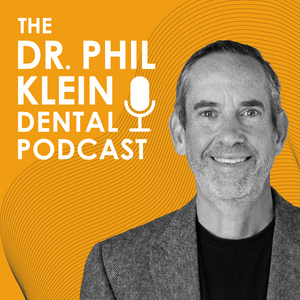
Über The Dr. Phil Klein Dental Podcast
The Dr. Phil Klein Dental Podcast is the #1 clinical dental podcast for evidence-based dentistry. Hosted by endodontist Dr. Phil Klein, DMD - trusted by 250,000+ dental professionals with 750+ episodes since 2018.
The fastest-growing dental podcast worldwide, The Dr. Phil Klein Dental Podcast delivers cutting-edge clinical dentistry, state-of-the-art dental education, and actionable practice management strategies to more than 250,000 dental professionals globally. Two new episodes every Monday and Thursday featuring world-renowned clinicians, dental school faculty, academic researchers, specialty leaders, and practice management experts discussing the latest advances in evidence-based dentistry and modern practice growth you can apply immediately in practice.
Episodes span every major dental specialty - from implant dentistry, endodontics, and restorative dentistry to cosmetic dentistry, digital workflows, sleep dentistry, oral surgery, periodontics, infection control, and pediatric dentistry - giving dental professionals a single trusted source for cutting-edge clinical education across the full scope of modern dentistry.
Guests include leading clinicians from Harvard School of Dental Medicine, University of Pennsylvania School of Dental Medicine, University of Florida College of Dentistry, the American Academy of Cosmetic Dentistry, the American Academy of Endodontists, and top dental institutions across the United States and internationally. Every episode is focused on clinical excellence and state-of-the-art dental techniques — evidence-based dentistry at its highest level.
Perfect for:
General dentists seeking cutting-edge clinical techniques and evidence-based protocols
Dental specialists staying current across adjacent specialties
Dental hygienists and assistants accessing clinical education beyond typical CE options
Dental students and new graduates building a strong clinical foundation
Practice owners integrating state-of-the-art digital workflows, modern dental materials, and proven practice management strategies
Full episode library and clinical show notes: philkleindentalpodcast.com
Podcast-WebsiteHöre The Dr. Phil Klein Dental Podcast, Die Ernährungs-Docs - Essen als Medizin und viele andere Podcasts aus aller Welt mit der radio.de-App
Hol dir die kostenlose radio.de App
- Sender und Podcasts favorisieren
- Streamen via Wifi oder Bluetooth
- Unterstützt Carplay & Android Auto
- viele weitere App Funktionen
 Deutschland

