
Höre diesen Podcast kostenlos in der App: Kostenlos im App Store laden
radio.de
Sleeptimer
Sender speichern
647 Episoden
Kollagen: Hält die 10-Gramm-Regel für straffere Haut? Jemand hat nachgerechnet (#590)
19.10.2026 | 35 Min.Ein Drittel aller Proteine in Deinem Körper besteht aus einem einzigen Stoff. Er hält Deine Haut straff, Deine Gelenke geschmeidig, Deine Knochen stabil und Deine Sehnen belastbar. Und ab etwa 25 produziert Dein Körper jedes Jahr etwas weniger davon.
Kollagen gehört zu den beliebtesten Nahrungsergänzungsmitteln und gleichzeitig zu den umstrittensten. Die einen schwören darauf, die anderen halten es für teuren Urin. Die Werbung verspricht meist ein oder mehrere dieser Punkte: schönere Haut, gesunde Gelenke, starke Knochen oder mehr Muskeln. Was ist wirklich dran? Lass uns jeden der vier Fälle auf den Prüfstand stellen: mit der besten verfügbaren Studienlage und meiner persönlichen Einordnung.
Am Ende der Folge kannst Du eine informierte Entscheidung treffen: Ist Kollagen ein sinnvoller Baustein für Dich oder kannst Du es Dir guten Gewissens sparen?
____________
*WERBUNG: Infos zum Werbepartner dieser Folge und allen weiteren Werbepartnern findest Du hier.
____________
🔗 Links:
Das Kollagen, das bei Mark zu Hause im Shake landet (Kollagenhydrolysat Typ I und III, 10 g pro Tag, mit Vitamin C): Collagenoform Peptide Hyaluronsäure+ von FormMed*
Zum Nachlesen: Der Beitrag zur Folge.
Studie-des-Monats-Newsletter und Ratgeber Nahrungsergänzung: marathonfitness.de/basis-supplemente
Einnahme-Empfehlung:
Dosierung nach Ziel:
Gelenke: 10 g hydrolysiertes Kollagen pro Tag, mindestens 3 Monate. Alternativ 40 mg undenaturiertes Typ-II-Kollagen (UC-II) pro Tag.
Knochen: 5 g Kollagenpeptide pro Tag, zusammen mit Calcium und Vitamin D, in Jahren denken.
Sehnen und Bänder: 10 bis 15 g Kollagen plus Vitamin C, etwa eine Stunde vor dem Training.
Muskeln: Whey-Protein bleibt die erste Wahl. Kollagen nur ergänzend.
Haut: Evidenz offen. Wer es probiert: 10 g/Tag, 8 bis 12 Wochen, vorher und nachher ein Foto.
Quelle: Rind, Schwein oder Fisch sind in Studien gleichwertig. Entscheidend ist der Hydrolysegrad.
Literatur:
(Auswahl, alle Quellen im Beitrag zur Folge.)
Grimes & Mahto (2026): Hydrolyzed Collagen for Skin Aging Meta-Analyses Are Unreliable. J Cosmet Dermatol, 25(10), e71208.
Pu et al. (2023): Effects of Oral Collagen for Skin Anti-Aging. Nutrients, 15(9), 2080.
de Miranda et al. (2021): Hydrolyzed collagen supplementation on skin aging. Int J Dermatol, 60(12), 1449–1461.
Myung & Park (2025): Effects of Collagen Supplements on Skin Aging. Am J Med, 138(9), 1264–1277.
Hughes et al. (2013): Sunscreen and Prevention of Skin Aging. Ann Intern Med, 158(11), 781–790.
Liang et al. (2024): Collagen derivatives for osteoarthritis: a trial sequential meta-analysis. Osteoarthritis Cartilage, 32(3), 268–279.
Lugo et al. (2016): Undenatured type II collagen in knee osteoarthritis. Nutr J, 15, 14.
König et al. (2018): Specific Collagen Peptides Improve Bone Mineral Density in Postmenopausal Women. Nutrients, 10(1), 97.
Oikawa et al. (2020): Whey protein but not collagen peptides stimulate muscle protein synthesis. Am J Clin Nutr, 111(3), 708–718.
Shaw et al. (2017): Vitamin C-enriched gelatin supplementation augments collagen synthesis. Am J Clin Nutr, 105(1), 136–143.
🎧 Marks Hörbücher, selbst eingelesen: Dranbleiben!, Looking Good Naked.
Shownotes und Übersicht aller Folgen.
Trag Dich in Marks Dranbleiber-Newsletter ein.
Entdecke Marks Bücher.
Folge Mark auf Instagram und Strava.
Hosted on Acast. See acast.com/privacy for more information.Dr. Moritz Binder – 20 Klimmzüge und trotzdem Bluthochdruck-Kandidat: Was fitte Menschen übersehen (#589)
12.10.2026 | 1 Std. 34 Min.20 Klimmzüge, Topform, und trotzdem rechnet Notfallmediziner Dr. Moritz Binder damit, eines Tages Blutdrucktabletten zu benötigen. Warum ihn das nicht beunruhigt, erfährst Du in dieser Folge. Und warum Dein Blutdruck vielleicht der wichtigste Wert ist, den Du gerade nicht im Blick hast.
Dr. med. Moritz Binder ist Arzt für Anästhesie und Notfallmedizin. Auf der Schlaganfall-Station sah er jeden Tag Menschen, in denen er sich selbst wiederfand: gestresst, übergewichtig, mit „ein wenig zu hohen“ Werten, die niemand ernst nahm. Bei ihm hatte das Messgerät seiner Oma schon mit Anfang 20 Alarm geschlagen. Heute zeigt er mit seinem Buch „Dein Bluthochdruck. Dein Plan“, wie Du Deinen Blutdruck mit einem 30-Tage-Plan in den Griff bekommst.
In dieser Folge erfährst Du, warum Werte, die viele Ärzte als „ganz okay“ abnicken, Dein Risiko bereits spürbar erhöhen. Wie Dein Messgerät Dir einen Bluthochdruck anzeigen kann, den Du gar nicht hast. Mit welcher Atemübung Du Deinen Blutdruck in fünf Minuten messbar senkst. Und wie Du in zwei Wochen selbst herausfindest, ob die Salzmenge für Dich überhaupt ein relevantes Thema ist.
Viel Spaß mit diesem Gespräch!
____________
*WERBUNG: Infos zum Werbepartner dieser Folge und allen weiteren Werbepartnern findest Du hier.
____________
🎙 Alle Shownotes, Links und Messgerät-Empfehlungen: marathonfitness.de/moritz-binder/
📖 Buch: „Dein Bluthochdruck. Dein Plan.“ von Dr. Moritz Binder
🌐 Moritz’ Website: moritzbinder.com
Zeitmarken:
Das Messgerät der Oma: 145 mit Anfang 20? [0:03:19]
Ab wann Dein Blutdruck wirklich zu hoch ist [0:05:56]
Nur 4 von 10 Deutschen haben optimale Werte [0:08:57]
Schlaganfall-Station: Spitzenmedizin, die zu spät kommt [0:10:30]
„Da lande ich irgendwann selbst“ [0:16:31]
Die Lostrommel des Lebens: Wie Bluthochdruck Deine Chancen halbiert [0:17:44]
„An irgendwas muss man ja sterben“: Der Irrtum, der Jahrzehnte kostet [0:21:28]
Warum Du Bluthochdruck nicht spürst, und auch nicht seine Besserung [0:23:35]
Risikorechner: Was zehn Kilo weniger wirklich ausmachen [0:24:58]
Schlaf, Puls und HRV im Blick, den Blutdruck vergessen? [0:26:21]
Warum Bluthochdruck ein dankbarer Gegner ist [0:30:22]
20 Klimmzüge, VO2max 66 und trotzdem Bluthochdruck-Kandidat [0:32:55]
Marks Messfehler: Die zu enge Manschette [0:36:00]
Zwei Drittel der Praxen messen falsch: Was Du beim Arzt tun kannst [0:39:58]
Apple Watch, WHOOP & Co.: Spielerei oder Frühwarnsystem? [0:41:56]
„Auf 180“: Was die Psyche mit Deinem Blutdruck macht [0:46:58]
Armbruch und Prüfungsstress: Wie die Seele die Wundheilung bremst [0:47:39]
Warum Yoga nicht für jeden der Weg zur Entspannung ist [0:51:05]
Der Fünf-Minuten-Selbsttest mit Atmung und Messgerät [0:52:49]
Ist das Schummeln? Und wann es ausdrücklich erlaubt ist [0:53:40]
Wie Dein Atem Deinen Herzschlag steuert [0:55:55]
Ausdauertraining: Wenig mmHg, aber der größte Hebel fürs Leben [0:58:25]
Krafttraining und Isometrie: Rund acht Punkte ohne Medikament [1:00:29]
Warum sich die Effekte nicht einfach addieren, und was trotzdem möglich ist [1:03:00]
Ist Salz wirklich der Bösewicht? [1:05:11]
Deine persönliche Salzstudie: Zwei Wochen, eine klare Antwort [1:06:45]
Gentests, ApoE und das Demenzrisiko [1:08:10]
Magnesium, Kalium, Kalzium: Die Gegenspieler des Salzes [1:14:10]
Magnesium messen oder einfach nehmen? [1:17:19]
Warum Kalium-Tabletten aus der Drogerie riskant sein können [1:19:59]
Blutdruckmedikamente: Kritik an der Pharma, Lanze für die Tabletten [1:23:31]
Jeder Zweite nimmt seine Tabletten nicht wie verordnet, und das liegt nicht an den Patienten [1:26:53]
Schützt die Tablette so gut wie ein natürlich guter Wert? [1:28:32]
Blutdrucksenker und Mikronährstoffe: Gibt es Wechselwirkungen? [1:30:35]
Diagnose Bluthochdruck: Die drei ersten Schritte [1:31:30]
Die Botschaft fürs Smartphone [1:34:01]
FRAGE: Kennst Du Deinen Blutdruck? Und welchen Selbsttest probierst Du als Erstes aus? Schreib’s in die Kommentare.
🎧 Marks Hörbücher, selbst eingelesen: Dranbleiben!, Looking Good Naked.
Shownotes und Übersicht aller Folgen.
Trag Dich in Marks Dranbleiber-Newsletter ein.
Entdecke Marks Bücher.
Folge Mark auf Instagram und Strava.
Hosted on Acast. See acast.com/privacy for more information.Wie Du Anstrengung richtig liest und mehr aus Deinem Training machst (#588)
05.10.2026 | 42 Min.Wenn Du denkst „Ich kann nicht mehr“, haben Deine Muskeln meist noch Reserven. Die Bremse zieht Dein Kopf. Gute Nachricht: Auf den hast Du Einfluss.
Erschöpfte Rugbyspieler schaffen im Sprint direkt danach das Dreifache der Leistung, an der sie gerade gescheitert sind. Du erfährst, warum das so ist und über welche zwei Wege Du diese Bremse lockerst. Warum Dein Lieblingssong ans Ende gehört. Warum Du Dich beim Selbstgespräch besser duzt. Welcher Zuckerwasser-Kniff bei langen Ausdauereinheiten hilft, obwohl Du nichts schluckst. Und welche Frage Dir im Satz verrät, ob es nur brennt oder wirklich Schluss ist.
Danach kannst Du jeden Social-Media-Leistungstipp selbst einordnen. Und Du hörst, wie ein Ladefehler von fünf Kilo zu meiner persönlichen Bestleistung im Kreuzheben wurde.
____________
*WERBUNG: Infos zum Werbepartner dieser Folge und allen weiteren Werbepartnern findest Du hier. (Produktlinks sind Affiliate-Links.)
____________
Ressourcen aus der Folge:
📬 Dranbleiber-Newsletter, jeden Sonntag (dort lief die „Reservefrage“): marathonfitness.de/newsletter
📖 Mehr zur inneren Stimme im Buch „Dranbleiben!“
🎙️ Folge #559 mit Jürgen Gießing, Mitautor der Zwei-Wiederholungen-Studie
Quellen:
Amann et al. (2009): Opioid-mediated muscle afferents inhibit central motor drive. J Physiol, 587(1), 271–283
Armes et al. (2020): „Just one more rep!“ Front Psychol, 11, 565416
Blanchfield et al. (2014): Talking yourself out of exhaustion. Med Sci Sports Exerc, 46(5), 998–1007
Burnley (2010): The limit to exercise tolerance in humans: validity compromised. Eur J Appl Physiol, 109(6), 1225–1226
Carter et al. (2004): The effect of carbohydrate mouth rinse. Med Sci Sports Exerc, 36(12), 2107–2111
Chambers et al. (2009): Carbohydrate sensing in the human mouth. J Physiol, 587(8), 1779–1794
De Morree et al. (2012): Perception of effort reflects central motor command. Psychophysiology, 49(9), 1242–1253
Doherty & Smith (2005): Effects of caffeine ingestion on rating of perceived exertion. Scand J Med Sci Sports, 15(2), 69–78
Finn et al. (2020): Fatigue-related feedback from calf muscles. Med Sci Sports Exerc, 52(10), 2136–2144
Guest et al. (2021): ISSN position stand: caffeine and exercise performance. J Int Soc Sports Nutr, 18(1), 1
Hardy et al. (2019): To me, to you. J Sports Sci, 37(18), 2122–2130
Holgado et al. (2020): Mental fatigue might be not so bad. J Cogn, 3(1), 38
Holgado et al. (2021): Does mental fatigue impair physical performance? Eur J Sport Sci, 21(5), 762–770
Hutchinson & Karageorghis (2013): Moderating influence of dominant attentional style. J Sport Exerc Psychol, 35(6), 625–643
Kan et al. (2019): Cognitive demand of eccentric versus concentric cycling. Eur J Appl Physiol, 119(7), 1599–1610
Kong et al. (2025): Effects of sleep deprivation on sports performance. Front Physiol, 16, 1544286
Marcora (2008): Do we really need a central governor? Eur J Appl Physiol, 104(5), 929–931
Marcora & Staiano (2010): The limit to exercise tolerance in humans: mind over muscle? Eur J Appl Physiol, 109(4), 763–770
Marcora et al. (2009): Mental fatigue impairs physical performance in humans. J Appl Physiol, 106(3), 857–864
Martin (1981): Effect of sleep deprivation on tolerance of prolonged exercise. Eur J Appl Physiol Occup Physiol, 47(4), 345–354
Pageaux (2016): Perception of effort in exercise science. Eur J Sport Sci, 16(8), 885–894
Río-Rodríguez et al. (2016): Set configuration in resistance exercise. PLoS ONE, 11(3), e0151163
Terry et al. (2020): Effects of music in exercise and sport. Psychol Bull, 146(2), 91–117
Zourdos et al. (2016): Novel resistance training-specific rating of perceived exertion scale. J Strength Cond Res, 30(1), 267–275
🎧 Marks Hörbücher, selbst eingelesen: Dranbleiben!, Looking Good Naked.
Shownotes und Übersicht aller Folgen.
Trag Dich in Marks Dranbleiber-Newsletter ein.
Entdecke Marks Bücher.
Folge Mark auf Instagram und Strava.
Hosted on Acast. See acast.com/privacy for more information.Der Spiegel lügt. Aber nicht so, wie Du denkst. (#587)
28.09.2026 | 42 Min.„Du hast vergessen, Dein Gesicht zu trainieren.“ Mit diesem Satz aus einem Internetforum beginnt für einen jungen Mann ein Weg, der ihn bisher gut 11.000 Euro gekostet hat. Nase, Botox, Zähne … und als Nächstes plant er eine Operation am Kinn.
Looksmaxxing heißt diese Bewegung, und sie ist längst im Mainstream angekommen. Du planst vermutlich keinen Umbau Deines Kiefers. Und trotzdem geht es in dieser Folge um Dich. Denn die Fragen dahinter stellen sich Menschen schon lange: Wie viel ist Dein Aussehen wirklich wert, für Erfolg, Beziehungen, Wohlbefinden? Ab wann wird der Wunsch, gut auszusehen, zur Last? Und woran würdest Du merken, wenn Du vielleicht schon mittendrin gesteckt hättest?
Am Ende der Folge weißt Du, was in Deinem Kopf passiert, wenn Du durch einen Fitness-Feed scrollst (und warum es den meisten von uns geht wie Dir). Woran Du erkennst, ob Dein Ehrgeiz Dir noch guttut oder längst gegen Dich arbeitet. Warum der berühmte Attraktivitätsbonus bei genauer Prüfung viel kleiner ausfällt als gedacht. Und warum Dein Alter beim Thema Körperbild kein Gegner ist, sondern ein Verbündeter.
Die Grenze zwischen gesundem Ehrgeiz und der anderen Seite passt am Ende in eine Frage: Trainierst Du aus Neugier oder aus Angst?
Falls Dich das Thema persönlich belastet: Sprich mit jemandem, der sich damit auskennt. Das ist keine Schwäche, sondern Verantwortung für Dich selbst.
____________
*WERBUNG: Informationen zum Werbepartner dieser Folge und allen weiteren Werbepartnern findest Du hier.
🎧 In eigener Sache: Mein Buch Looking Good Naked: Die Gesamtausgabe gibt’s jetzt endlich auch als Hörbuch – eingelesen von meiner Wenigkeit. Du findest es z.B. bei Audible / Amazon oder Apple Books.
____________
In der Folge erwähnt:
Folge 586: Die Wissenschaft der Attraktivität mit Dr. Stéphane Stahl
Folge 485 und 486: Körperbild, die praktische Seite
The Guardian: From bone smashing to chin extensions (die Geschichte von James)
The Daily (New York Times): Gespräch mit Joe Bernstein über Looksmaxxing
Buch: Dranbleiben (die Werteübung, auf die sich Mark bezieht)
Dranbleiber-Newsletter: marathonfitness.de/newsletter
Wissenschaftliche Quellen:
Veale et al. (2016): Body dysmorphic disorder in different settings. Body Image, 18, 168–186.
Phillips et al. (2006): Gender similarities and differences in 200 individuals with body dysmorphic disorder. Compr Psychiatry, 47(2), 77–87.
Mitchell et al. (2017): Muscle dysmorphia symptomatology in bodybuilders and resistance trainers. Sports Med, 47(2), 233–259.
Luo et al. (2018): Social comparison in the brain. Hum Brain Mapp, 39(1), 440–458.
de Valle et al. (2021): Social media, body image, and the question of causation. Body Image, 39, 276–292.
Bortnikova et al. (2024): Beauty and professional success: A meta-analysis. CEPR Discussion Paper 18978.
Ma-Kellams et al. (2017): Attractiveness and relationship longevity. Pers Relatsh, 24(1), 146–161.
Diener et al. (1995): Physical attractiveness and subjective well-being. J Pers Soc Psychol, 69(1), 120–129.
Limburg et al. (2017): The relationship between perfectionism and psychopathology: A meta-analysis. J Clin Psychol, 73(10), 1301–1326.
Teixeira et al. (2012): Exercise, physical activity, and self-determination theory: A systematic review. Int J Behav Nutr Phys Act, 9, 78.
Elion et al. (2012): Perfectionism in African American students. Cultur Divers Ethnic Minor Psychol, 18(2), 118–127.
Thai et al. (2023): Reducing social media use improves appearance and weight esteem in youth with emotional distress. Psychol Pop Media.
Bonfanti et al. (2025): The association between social comparison in social media, body image concerns and eating disorder symptoms. Body Image, 52, 101841.
Tiggemann & Lynch (2001): Body image across the life span in adult women. Dev Psychol, 37(2), 243–253.
Callan et al. (2015): Age differences in social comparison tendency and personal relative deprivation. Pers Individ Dif, 87, 196–199.
Tiggemann & McCourt (2013): Body appreciation in adult women. Body Image, 10(4), 624–627.
🎧 Marks Hörbücher, selbst eingelesen: Dranbleiben!, Looking Good Naked.
Shownotes und Übersicht aller Folgen.
Trag Dich in Marks Dranbleiber-Newsletter ein.
Entdecke Marks Bücher.
Folge Mark auf Instagram und Strava.
Hosted on Acast. See acast.com/privacy for more information.Die Wissenschaft der Attraktivität: Gesundheit schlägt Perfektion – mit Dr. Stéphane Stahl (#586)
21.09.2026 | 1 Std. 22 Min.Du stehst vor dem Spiegel, ein kurzer Blick – und Dein Gehirn hat längst geurteilt. In 13 Millisekunden, schneller als jeder bewusste Gedanke. Aber ist dieses Urteil wirklich Deins? Oder haben Instagram-Filter und Hochglanzmagazine es Dir eingeredet?
Dr. med. Stéphane Stahl ist Facharzt für Plastische und Ästhetische Chirurgie, habilitierter Wissenschaftler mit über 40 Fachpublikationen und mehr als 700 Zitationen in der Fachliteratur – und Vorstandsmitglied der Vereinigung der Deutschen Ästhetisch-Plastischen Chirurgen.
Ausgerechnet er hat mit „Wunderschön“ ein Buch geschrieben, das ausdrücklich nicht für Schönheits-OPs wirbt. Angefangen hat es mit einer Provokation unter Freunden, ein paar Gin Tonics nach Mitternacht. Herausgekommen sind über 800 ausgewertete Studien aus Psychologie, Evolutionsbiologie, Neurologie und Soziologie – und ein Ergebnis, das gängigen Schönheitsidealen widerspricht: Attraktivität ist keine Frage von Perfektion, sondern ein Signal für Gesundheit. Und Extreme wirken in jede Richtung unattraktiv.
In dieser Folge erfährst Du:
Warum „Schönheit liegt im Auge des Betrachters“ wissenschaftlich nicht haltbar ist – und was stattdessen gilt.
Warum Durchschnitt attraktiver ist als Perfektion – und warum das eine gute Nachricht für Dein Selbstbild ist.
Was Krafttraining, Ernährung und Schlaf für Deine Ausstrahlung tun – in jedem Alter.
Viel Spaß mit diesem Gespräch!
____________
*WERBUNG: Informationen zum Werbepartner dieser Folge und allen weiteren Werbepartnern findest Du hier.
🎧 In eigener Sache: Mein Buch Looking Good Naked: Die Gesamtausgabe gibt’s jetzt endlich auch als Hörbuch – eingelesen von meiner Wenigkeit. Du findest es z. B. bei Audible / Amazon oder Apple Books.
____________
👉 Vollständige Shownotes: marathonfitness.de/stephane-stahl/
Buchempfehlung: „Wunderschön“ von Dr. Stéphane Stahl (Hörbuch)
Zeitmarken
[0:00:00] Intro
[0:03:08] Wie ein Promi-Foto und ein paar Gin Tonics ein Buch auslösten
[0:04:13] „Das habe ich doch nicht nötig": Eitelkeit in Deutschland und Brasilien
[0:08:39] 800 Studien und der Publikumsjoker: Attraktivität ist messbar
[0:14:08] 13 Millisekunden: Was in Deinem Gehirn passiert
[0:16:27] Das Prinzip der Durchschnittlichkeit: Warum es keine Perfektion gibt
[0:22:55] Liegt Schönheit doch im Auge des Betrachters?
[0:25:08] Taille-Hüfte-Verhältnis 0,7: Venus von Willendorf und Rubens
[0:31:28] Attraktiv gleich gesund? Partnerwahl und Evolution
[0:36:57] Wann der Rückschluss in die Irre führt: Leidensdruck ernst nehmen
[0:40:19] Sport als Medizin: Welche Signale ein trainierter Körper sendet
[0:45:38] Die Grenzen des BMI
[0:47:18] Zwischenbilanz: Statistik, Bandbreite und warum Du kein Supermodel sein musst
[0:48:33] Krafttraining, Schlaf und Karotten: Was Du beeinflussen kannst
[0:50:42] Hautton, Mode und sozialer Status
[0:55:29] Warum Menschen sich wirklich operieren lassen
[0:58:29] Altern: Was bleibt, was sich verändert
[1:00:19] Barbie, Social Media und Essstörungen: Zusammenhang oder Ursache?
[1:06:16] Biologie oder Diskriminierung: Wo liegt die Grenze?
[1:07:52] Mehr Schönheit und Ehrlichkeit: graue Haare, Haarausfall, Balance
[1:18:42] Ein Rat für alle, die mit ihrem Körperbild hadern
[1:20:48] Drei Gedanken zum Mitnehmen
Was hat Dich in diesem Gespräch am meisten überrascht – und was nimmst Du für Dich mit? Schreib’s in die Kommentare.
🎧 Marks Hörbücher, selbst eingelesen: Dranbleiben!, Looking Good Naked.
Shownotes und Übersicht aller Folgen.
Trag Dich in Marks Dranbleiber-Newsletter ein.
Entdecke Marks Bücher.
Folge Mark auf Instagram und Strava.
Hosted on Acast. See acast.com/privacy for more information.
Weitere Ernährung Podcasts







Trending Ernährung Podcasts

Über Fitness mit M.A.R.K. - Abnehmen, Muskelaufbau, Ernährung und Gesundheit
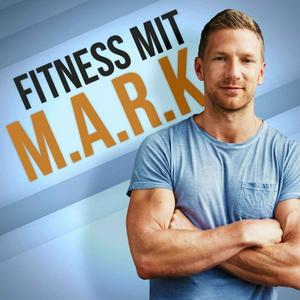
Hier liest Mark Maslow die Studien, prüft die Trends und sortiert den ganzen Lärm raus, der heute „Fitness-Tipp“ heißt. Übrig bleibt das, was wirklich funktioniert.Konkret: Strategien für Abnehmen, Muskelaufbau, Ernährung und Gesundheit, die in Dein echtes Leben passen – auch dann, wenn der Kalender voll, der Job fordernd und der Tag schon halb vorbei ist.Keine Quick-Fixes. Keine Dogmen. Kein Verzicht. Stattdessen wissenschaftlich fundierte Wege, die Du morgen früh anwenden kannst – ob Du gerade erst anfängst oder schon zehn Jahre dranbleibst.Host Mark Maslow ist Fitness Coach, Diplom-Ingenieur und Bestseller-Autor von Dranbleiben! und Looking Good Naked. Seine Mission seit über zehn Jahren: Dir zeigen, wie Du mit weniger Druck, mehr Freude und klarer Strategie dranbleibst.💪 Jeden Sonntag ein Impuls für die Woche. Über 30.000 Dranbleiber:innen bekommen Marks Newsletter – kostenlos, kein Spam, in zwei Minuten gelesen. 👉 marathonfitness.de/newsletter Hosted on Acast. See acast.com/privacy for more information.
Podcast-WebsiteHöre Fitness mit M.A.R.K. - Abnehmen, Muskelaufbau, Ernährung und Gesundheit, Doppelrahmstufe und viele andere Podcasts aus aller Welt mit der radio.de-App
Hol dir die kostenlose radio.de App
- Sender und Podcasts favorisieren
- Streamen via Wifi oder Bluetooth
- Unterstützt Carplay & Android Auto
- viele weitere App Funktionen
Hol dir die kostenlose radio.de App
- Sender und Podcasts favorisieren
- Streamen via Wifi oder Bluetooth
- Unterstützt Carplay & Android Auto
- viele weitere App Funktionen
Fitness mit M.A.R.K. - Abnehmen, Muskelaufbau, Ernährung und Gesundheit
Code scannen,
App laden,
loshören.
App laden,
loshören.
 Deutschland