
Höre diesen Podcast kostenlos in der App: Kostenlos im App Store laden
radio.de
Sleeptimer
Sender speichern
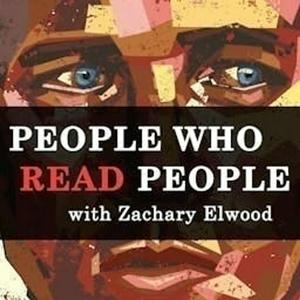
People Who Read People: A Behavior and Psychology Podcast
Zachary Elwood
Neueste Episode
224 Episoden
The "Lie Guy" wrote a book on reading body language in interrogations—then changed his mind
17.10.2026 | 56 Min.Can trying to read people's body language make investigators worse at finding the truth? Veteran interrogator and trainer Stan B. Walters, known as “the Lie Guy” (thelieguy.com) and author of “Principles of Kinesic Interview and Interrogation,” explains why he moved away from many of the nonverbal behavior ideas he once taught—and why he now focuses on listening to what people say. We discuss his and others’ research on telling lies from truth in real criminal interrogations, why bad ideas about nonverbal behavior and aggressive interviewing tactics persist in police training, and how investigators can accidentally feed suspects information that “contaminates” the interview and makes their job harder. Stan shares stories of an interview that unexpectedly uncovered a serial killer and a murder-attempt survivor whose important detail was missed because nobody asked the right questions. We explore what actually matters when listening to people: looking for gaps in people’s stories, thinking about how logical and verifiable their stories are, and more.
Hosted by Simplecast, an AdsWizz company. See pcm.adswizz.com for information about our collection and use of personal data for advertising.Pro slot machine player on gambling strategies, risks, the lifestyle, and more
11.10.2026 | 49 Min.How does someone make a living playing slot machines—and why would casinos let them? After joining professional gambler Chris Huang on a casino trip in Atlantic City, I talk with him about the unusual career of casino “advantage play” and how pro slot machine players capture the money left behind by other, less knowledgeable players. We explore why manufacturers create beatable machines, the psychological tricks that machine makers use to attract players, and the unethical actions some slot machine pros take to manipulate players into leaving profitable seats. Chris explains the risks pro slot machine players can encounter, how seemingly promising opportunities can turn into expensive mistakes, why a little knowledge can be dangerous, and what happens when you run out of cash in the middle of a long-term play. We also discuss online gambling “gurus” selling dubious claims of expertise, the secrecy and competition among slot professionals, and the appeal—and pressures—of making a living this way. Learn more about Chris at youtube.com/@gamblingeducationwithchris.
Hosted by Simplecast, an AdsWizz company. See pcm.adswizz.com for information about our collection and use of personal data for advertising.A private investigator's tips on reading and manipulating people
03.10.2026 | 1 Std. 6 Min.A talk with Andrew Thompson, a New York City-area private investigator and a researcher of criminal behavior and interrogation techniques. Andrew shares how he gets people talking while lacking the authority and command of a police badge, and what studying FBI crime cases and interrogations taught him about linguistic clues to deception in people’s stories. We also discuss his research into criminal personality categories and how that may be tied to linguistic patterns. We discuss how mistaking signs of anxiety for guilt or deception can send investigators down very wrong paths; and how aggressive questioning can contribute to false confessions and other negative outcomes. We discuss why appearing uninterested in an important revelation from someone can sometimes encourage them to reveal more, and other tips on influencing and manipulating people in order to achieve investigative results. And Andrew discusses how AI advances have affected the investigative industry.
Hosted by Simplecast, an AdsWizz company. See pcm.adswizz.com for information about our collection and use of personal data for advertising.She’s certified by Joe Navarro in body language: How has it helped her?
27.09.2026 | 44 Min.On this podcast I sometimes explore the “behavior expert” industry. One thing I'm curious about is the value people say that they’ve received from “behavior expert” trainings and certifications. This is a talk with Gallia Winkler, a psychological coach and a behavioral student of Joe Navarro’s; she’s been certified in his Body Language Expert Program. I ask her about what drives her interest in nonverbal behavior, what value she believes she’s gotten from Navarro's teachings, and how those teachings have helped her in her personal and professional life.
Hosted by Simplecast, an AdsWizz company. See pcm.adswizz.com for information about our collection and use of personal data for advertising.A critical look at Paul Ekman, Joe Navarro, and the entire "behavior expert" industry
20.09.2026 | 1 Std. 54 Min.A talk with former CIA officer Kent Clizbe about the exaggerated, irresponsible claims made by many self-described “behavior experts,” focusing especially on Paul Ekman, Joe Navarro, microexpressions, and attempts to detect deception from body language. We discuss why facial expressions and physical movements cannot be interpreted through a universal dictionary, how cultural and individual differences make behavioral judgments especially difficult, and why nervousness or discomfort is rarely meaningful evidence of guilt or deception in high-stakes situations. We examine the failed TSA SPOT program, the influence of shows like “Lie to Me” (which was loosely based on Paul Ekman’s work), and the lack of convincing real-world, high-stakes examples supporting “behavior expert” claims. We also explore how behavioral hunches can contribute to tunnel vision, false confessions, and wrongful convictions; why games like poker can offer a more constrained and useful setting for behavioral reads; and why the most actionable information in high-stakes situations almost always comes from what people say, what they leave out, and how their statements compare with known facts.
Hosted by Simplecast, an AdsWizz company. See pcm.adswizz.com for information about our collection and use of personal data for advertising.
Weitere Gesundheit und Fitness Podcasts









Trending Gesundheit und Fitness Podcasts
























Über People Who Read People: A Behavior and Psychology Podcast
This show will help you understand human behavior and psychology so you can better navigate your personal and professional life and better connect with people. The host Zachary Elwood, known for his Reading Poker Tells trilogy of books, talks with a wide range of guests who have unique real-world insights, including: law enforcement professionals, behavior and psychology researchers, sports analysts, visa officers, jury consultants, political researchers, mental health experts, and many more. What drives this show is the idea that truly understanding people requires patience, nuance, and a willingness to question simplistic ideas and assumptions. There are more than 200 episodes. To learn more details, see transcripts, and sign up for updates, go to www.behavior-podcast.com.
Podcast-WebsiteHöre People Who Read People: A Behavior and Psychology Podcast, Frauenstimmen und viele andere Podcasts aus aller Welt mit der radio.de-App
Hol dir die kostenlose radio.de App
- Sender und Podcasts favorisieren
- Streamen via Wifi oder Bluetooth
- Unterstützt Carplay & Android Auto
- viele weitere App Funktionen
Hol dir die kostenlose radio.de App
- Sender und Podcasts favorisieren
- Streamen via Wifi oder Bluetooth
- Unterstützt Carplay & Android Auto
- viele weitere App Funktionen
People Who Read People: A Behavior and Psychology Podcast
Code scannen,
App laden,
loshören.
App laden,
loshören.
 Deutschland