

Höre diesen Podcast kostenlos in der App: Kostenlos im App Store laden
radio.de
Sleeptimer
Sender speichern
108 Episoden
When Production Overtakes Prototyping: Materialise’s Next Phase of AM
13.10.2026 | 1 Std. 2 Min.In this episode of Additive Snack, Fabian Alefeld sits down with Bart Van Der Schueren, CTO of Materialise, to discuss additive manufacturing's (AM) evolution from a prototyping tool to a true production technology. Bart shares his journey into AM through early stereolithography research at KU Leuven and reflects on Materialise's origins as a small service bureau that quickly realized it needed its own software to automate data preparation and workflows. Those early efforts eventually grew into the three pillars that define Materialise today: manufacturing, software and medical applications.
The conversation explores a major milestone for Materialise, as serial manufacturing volumes in its manufacturing business have now surpassed prototyping. Bart explains what's driving that shift, where AM is gaining traction fastest, and why industries such as hearing aids, dental, drones and aerospace are moving at different speeds.
The discussion also examines the growing role of artificial intelligence in manufacturing, from design optimization and simulation to in-situ quality control, automated workflows and reducing the cost of new product introduction. Bart shares how Materialise is positioning itself for the next stage of AM growth while helping customers scale production in highly regulated industries.
01:59 Bart Origins in AM
04:49 Materialise Early Model
07:28 Three Pillars Emerge
09:59 From Prototypes to Parts
15:07 Serial Production Milestone
20:22 Industries Driving Adoption
23:13 Aerospace Slow Burn
27:24 Disruptors Drones and Agile
31:02 Iterative Printing Workflow
32:19 AI Driven Rapid Iteration
34:11 Mass Customization With AI
38:47 Design AI Beyond Hype
42:06 AI For In Situ Quality
45:28 NPI Costs And Scaling
48:16 Materialise Strategy Ahead
55:00 Industry Outlook No ReturnU.S. Navy's Captain Deichler on AM in the Submarine Industrial Base
06.10.2026 | 1 Std. 4 Min.Fabian Alefeld speaks with Captain Jason Deichler, Chief of Staff, Director, Submarine Programs, about the U.S. Navy’s effort to increase submarine production and sustainment capacity while rebuilding a strained industrial base. Deichler explains the challenges created by decades of manufacturing consolidation, workforce shortages, supplier attrition, and lost casting and forging capabilities, all while pursuing the Navy’s ambitious "one plus two" goal: delivering one Columbia-class and two Virginia-class submarines annually.
The conversation explores the Navy’s strategy for strengthening submarine production, guided by Admiral Gaucher’s four pillars: stabilizing submarine designs, allowing prime shipyards to focus on integration, expanding the industrial base, and designing future platforms with advanced manufacturing in mind. Deichler discusses how additive manufacturing (AM) helps address obsolescence, reduce lead times, expand supplier capacity, and improve supply chain resilience.
They also examine the growing adoption of both polymer and metal AM, including the qualification of new materials and processes, lessons learned from deploying AM components, and the industry's progress toward certifying increasingly critical applications. The episode concludes with insights into supplier engagement, workforce development, and how companies can support the future of submarine production through the Submarine Industrial Base initiative.
02:21 The State of the Submarine Industrial Base
05:07 The Navy's "One Plus Two" Production Goal
06:54 The Four Pillars Strategy
10:54 Workforce, Suppliers & Obsolescence Challenges
13:12 Rebuilding Capacity with Advanced Manufacturing
18:45 Safety, Data & Certification Requirements
21:22 AI, Cobots & Productivity Improvements
25:34 When Additive Manufacturing Became Mission Critical
29:05 From Skepticism to Adoption
31:51 Scaling from 25 to 75 Qualified Parts
32:54 Lessons from Space Applications
35:16 Qualification and Production Scale-Up
36:22 Selecting the Right Parts for Additive Manufacturing
38:26 New Standards, PPDs & Material Qualification
39:54 Procurement, Ordering & Supply Chain Systems
42:18 Data Rights, Digital Thread & Machine Capacity
43:31 Supplier Demand and Industrial Base Growth
50:28 The Future: Tens of Thousands of Parts
56:00 Neo-Primes, Modularization & New Production Models
57:57 How Suppliers Can Get Involved
59:48 Closing ThoughtsBuilding Drones at Scale: SLS Production from Low-Volume to High-Rate Manufacturing
29.09.2026 | 44 Min.In this episode, host Fabian Alefeld sits down with Nick Classen, General Manager of Northwest Rapid Manufacturing, to explore how the company has grown from supporting early UAV production at Northwest UAV into a leading provider of polymer additive manufacturing (AM) services. Classen shares how Northwest Rapid began using EOS selective laser sintering (SLS) technology in 2008 and continues to operate its original system today.
The conversation examines why AM has become a strategic technology for UAV and aerospace applications, enabling lighter-weight components, reduced part counts, complex geometries, and a seamless path from functional prototyping to production. Classen emphasizes the importance of engaging AM experts early in the design process to ensure parts are optimized for manufacturability before release.
The episode also explores production scaling, with discussions around typical UAV production volumes, market growth driven by defense spending and industry consolidation, and applications ranging from structural brackets and housings to conformal fuel tanks. Classen highlights the role of advanced materials, including Nylon 12, glass-filled polymers, alumide, and flame-retardant materials, as well as the extensive post-processing, coating, testing, and EMI shielding capabilities required to deliver finished production parts. He concludes with insights into Northwest Rapid’s plans to expand into metal AM.
02:05 The Origins of Northwest Rapid Manufacturing
03:59 Why AM Makes Sense for UAVs
06:40 Designing for Additive from the Start
10:52 Low-Rate vs. High-Rate Production
12:29 Scaling for Future Market Growth
14:52 UAV Applications Moving into Production
16:41 Conformal Fuel Tanks and Structural Components
20:05 Materials Driving SLS Adoption
22:27 The Value of Post-Processing
23:00 Finishing and Certifying Fuel Tanks
24:16 Understanding EMI Shielding
24:57 Why More UAV Housings Are Being Printed
26:07 Growth Trends in the UAV Industry
28:39 Expanding into Metal AM
30:09 Opportunities Beyond UAVs
31:31 Educating the Next Generation of Drone Engineers
36:09 Scaling Operations to Meet Demand
37:27 Hiring, Workforce Development & Post-ProcessingThe AM Sasquatch: Challenging AM Qualification with Math, Physics, & AI
01.09.2026 | 55 Min.Fabian Alefeld welcomes back Harshil Goel, founder and CEO of Dyndrite, to discuss how current additive manufacturing (AM) qualification practices limit advanced laser powder bed fusion toolpaths by locking variables such as software, machine, strategy, layer height, and material. Harshil reviews MQ, IQ, OQ, and PQ, noting cost and rigidity increase toward part qualification.
They discuss Dyndrite’s roles in multiple America Makes efforts: AI4AM to reduce the specimen counts needed for material allowables (starting with 17-4PH) using improved statistical methods; DeltaQual 2.0 to enable “bracketed qualification” so parameter changes within a defined process window don’t retrigger requalification (including varying layer heights within a part); and Gotham to transfer scalable, qualified parameter approaches across different machines and sizes using materials like Scalmalloy.
Harshil describes “Sasquatch,” a physics-based KPV framework using ratios (e.g., energy density, enthalpy, melt pool dimensions) to bound process windows and increase confidence without relying solely on sensors or simulation, and highlights software and AI accelerating DOE and parameter iteration with a target program timeline of about two years.
01:34 What Dyndrite Builds
02:11 Why Qualification Blocks Innovation
03:58 IQ OQ PQ MQ Explained
08:22 PQ Locks Everything Down
09:00 America Makes Program Overview
09:57 AI4AM Materials Allowables
12:39 Process Windows Not Fixed Params
14:57 Delta Qual 2 Bracketed Qual
17:38 Partners Sensors And Confidence
19:25 Sasquatch New KPVs
25:33 Gotham Scaling Across Machines
27:07 Future Less PQ More Reuse
28:39 Industry Impact Of Faster Qual
29:52 Customer Owned Parameters
30:54 Additive As Moat
32:13 Microstructure Driven IP
33:12 Selling Machine Control
34:31 Breaking Vendor Silos
35:36 Two Year Timeline
37:57 Risks And Adoption
41:23 Software As Glue
42:11 AI Accelerated DOE
45:34 Math Meets Empiricism
49:48 Future Outlook WrapAM as a Moat: How Annihilator Created a Competitive Advantage in Broadhead Manufacturing
25.08.2026 | 1 Std. 8 Min.Fabian Alefeld interviews Brandon Brodie, co-founder and CEO of Annihilator Broadheads, about how an Idaho elk hunt and a lost bull sparked a new broadhead concept sketched by Brandon’s future partner Micah. They describe turning the 2D sketch into plastic CAD prototypes via Boise State, a makeshift “wind tunnel” test using Instant Pot steam, and early performance goals of flight, penetration, durability, and lethality. Field and improvised tests (steel drum, long-range accuracy, animal kills) plus third-party fluid dynamics modeling suggested Annihilator’s design created unusually large high-pressure and low-tension effects.
After major supply failures with investment casting and metal injection molding - causing shortages, high scrap rates, and lost dealers - Brodie brought manufacturing in-house, adopting metal laser powder bed fusion, improving repeatability and enabling new geometries like the Katana. He outlines ongoing innovation, potential adjacent products, and plans to leverage Annihilator’s additive capabilities for partnerships and contract manufacturing.
02:26 Elk Camp Origin
06:43 Sketch to Prototype
11:36 Instant Pot Wind Test
14:44 Performance Pillars
18:41 Steel Drum Proof
22:45 Real Hunt Validation
26:45 Fluid Dynamics Breakthrough
30:41 Engineering Led Marketing
33:32 Manufacturing Growing Pains
34:27 Industry Award Surprise
35:53 COVID Demand Crunch
36:54 Casting Supplier Failures
39:40 MIM Tooling Disaster
42:30 Additive Breakthrough
46:35 Learning Metal Printing
49:55 Repeatability and Materials
52:56 Katana Broadhead Innovation
57:49 Scaling R&D Team
Weitere Technologie Podcasts







Trending Technologie Podcasts













Über Additive Snack
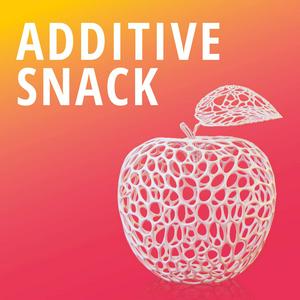
Join host Fabian Alefeld and a range of guests as they discuss all things additive manufacturing (AM) and 3D printing news, with interviews and real-world stories to educate and entertain. Each episode, Fabian talks to AM experts, professionals in specialist fields, and 3D printing users from all walks of life to deliver a well-rounded view on the state of AM.
Cut through the confusion surrounding polymer and metal additive manufacturing solutions with our digestible, down-to-earth discussions that deliver insights into common mistakes and best practice tips so you can get a clear understanding of AM — layer for layer.
Whether you’re curious about 3D printing technology for the aerospace industry, a deep dive into post processing, or applications of injection molding — we leave no spare parts behind. We want to provide you with the additive insight needed to stay laser focused and leverage every opportunity 3D printing materials have to offer.
Join us for an Additive Snack and we’ll help you and your business achieve growth and success through the latest developments in AM.
No marketing B.S. and no product pitches. Just the education, inspiration and information you and your organization need to drive business growth, brought to you by global AM leader EOS.
Get ready to feed your AM knowledge and find your path to success!
Podcast-WebsiteHöre Additive Snack, Flugforensik - ein Absturz und seine Geschichte und viele andere Podcasts aus aller Welt mit der radio.de-App
Hol dir die kostenlose radio.de App
- Sender und Podcasts favorisieren
- Streamen via Wifi oder Bluetooth
- Unterstützt Carplay & Android Auto
- viele weitere App Funktionen
Hol dir die kostenlose radio.de App
- Sender und Podcasts favorisieren
- Streamen via Wifi oder Bluetooth
- Unterstützt Carplay & Android Auto
- viele weitere App Funktionen
Additive Snack
Code scannen,
App laden,
loshören.
App laden,
loshören.
Additive Snack: Zugehörige Podcasts
 Deutschland