

Höre diesen Podcast kostenlos in der App: Kostenlos im App Store laden
radio.de
Sleeptimer
Sender speichern
52 Episoden
Ep 50 - The Mix Sounded Worse Loud… Here’s Why!
16.07.2026 | 10 Min.Studio Stuff Podcast | The Mix Sounded Worse Loud… Here’s Why!
Your mix sounds great at a normal listening level. Then you turn it up—and suddenly the reverb feels too loud, the cymbals sound harsh, and the low end starts taking over.
So, does that mean the mix is bad?
In this episode, we’re breaking down why mixes can sound dramatically different at louder playback levels. We talk about how human hearing changes with volume, how your speakers and room respond differently when pushed harder, and why one bad listening experience at a friend’s house shouldn’t send you back into a full remix.
We also explain how to check your mix loud without chasing problems that may not actually exist—and why reference tracks are essential before making any major changes.
You’ll Learn:
Why your ears hear frequencies differently at different volumes
Why bass, treble, reverb, and harshness become more noticeable when listening loud
How your speakers, amplifier, and room can change as the volume increases
Why one unfamiliar listening environment is only a single data point
How to use reference tracks when checking your mix at louder levels
Why your mix should become more exciting when turned up—not more painful
Topics & Stories:
The Fletcher-Munson curves and how they affect what we hear
Why a mix can sound balanced quietly but harsh when played loud
How to tell whether the problem is your mix, the room, or the playback system
Why checking your mix loud is useful—but shouldn’t become your main way of mixing
The value of listening quietly, from another room, or while doing something else
How references help you understand what “normal” sounds like at high volume
Listener Q&A:
Shoutout to Stefan Dawson from the Netherlands!
Stefan asked why a mix he loved suddenly revealed too much reverb and harshness when played loudly at a friend’s house. We explain why that reaction is completely normal—and how to decide whether the mix actually needs fixing.
Final Takeaway:
A mix will not sound exactly the same at every volume—and it shouldn’t.
The real goal is to create a mix that stays balanced and musical while becoming more exciting as the volume rises. Check it loud, check it quiet, compare it with trusted references, and always make your final decisions in a listening environment you know.
👉 Got a question for us?
📩 Submit it here: Form Link
We pull topics directly from your questions and YouTube comments.
And if you’re digging the show, hit follow/subscribe and leave a quick review.
It really helps more home studio folks find Studio Stuff.Ep 49 - Serve The Song: Cutting Parts Without Crushing Egos
04.07.2026 | 22 Min.Ep 49 - Serve The Song: Cutting Parts Without Crushing Egos
Two listener questions, two real studio problems this week. First up, what happens when a mix has too many great ideas competing for the same space, and how do you tell someone their part has to go without bruising their ego? Then we get into toms, arguably the hardest drum element to get right, and walk through our full process for cleaning, tuning, and sampling them until they sit huge in the mix.
We're talking arrangement, ego management, and the honest truth about how many "real" tom sounds you hear on records are actually sample-blended. Spoiler: probably all of them.
You'll Learn:
Why "serving the song" beats serving your own favorite part, every time
How to mute and A/B parts so the band hears the decision instead of just being told
Our go-to approach for gating and cleaning tom bleed before anything else happens
When and why we blend in samples, and why that's not cheating
How to keep consistency across tom hits using volume automation instead of relying on inconsistent playing
Topics & Stories:
The mid-recording camera mishap that kicked off this episode
Why removing a part doesn't mean it was a bad idea
The "help me help you" mindset for dealing with band egos
Firing yourself as a drummer to serve the song
The Black Salt Audio Silencer plugin and why it changed the tom game
Why reverb, compression, and sampled drums are all just tone shaping, not cheating
Listener Q&A:
This week's questions came from two YouTube commenters. One asked how to know which parts to cut when a mix feels too dense, and how to deliver that news to a bandmate without the drama. The other asked for help getting toms to sound big and clear when everything else in the mix is dialed in.
👉 Got a question for us?
📩 Submit it here: Form Link
We pull topics directly from your questions and YouTube comments.
And if you’re digging the show, hit follow/subscribe and leave a quick review.
It really helps more home studio folks find Studio Stuff.Ep 48 - The Great Preamp War: Why Both Sides of This Viral Video Drama Are Actually Right
28.06.2026 | 23 Min.The Great Preamp War: Why Both Sides of This Viral Video Drama Are Actually Right
So a video dropped last week and the whole audio world lost its mind. You know the one. A long, seriously impressive comparison of cheap interface preamps against a Neve-style preamp, ending with the verdict that they're all basically the same. Cue the passionate response videos and a very loud week online.
Here's the thing: we hadn't talked about any of it before we hit record. This episode is us taking both extremes and working through them in real time. We give massive credit where it's due (that comparison video is months of work and incredible storytelling), but we also dig into the part that got everyone fired up, which is testing one clean piece of the chain and then making a call about the whole puzzle. Somewhere in the middle of the car analogies and the tier rankings, we land on what actually moves the needle when you record.
You'll Learn:
Why a clean preamp comparison doesn't tell you the whole story
What pushing a preamp actually does to your sound, and why some pros build their entire mix around it
Where the preamp really sits on your recording priority list
Why your next upgrade is probably a mic, not a preamp
How good mic placement quietly outperforms expensive gear
👉 Got a question for us?
📩 Submit it here: Form Link
We pull topics directly from your questions and YouTube comments.
And if you’re digging the show, hit follow/subscribe and leave a quick review.
It really helps more home studio folks find Studio Stuff.Ep 46 - Why Your Limiter Hates Your Drums (And How We Fix It Upstream)
18.06.2026 | 23 Min.Your drums sound massive on their own, then they hit the mix bus and the limiter starts fighting back. In this episode we tackle a great listener question about keeping kick and snare transients under control so they don't trigger your limiter and squash the life out of your mix.
We get into the difference between transients and body, why the spike you can't even hear is the one wrecking your loudness, and how to fix the problem at the source instead of patching it in mastering. We also talk drum bus processing, the high pass trick that instantly calms things down, transient shaping as a subtractive tool, and where clipping fits into the chain.
Plus, a question about studying other engineers turns into a bigger conversation about stealing concepts rather than copying mixes, why a great album matters more than a famous name, and the new wave of unknown mixers making incredible records on laptops in their bedrooms.
You'll Learn:
Why transients and body are two different things, and why punch lives in both
How an inaudible spike can still trigger your limiter and kill your loudness
Why the drum bus is the best place to control peaks before they reach the two bus
How high passing your kick instantly calms your mix bus
Using transient shaping in reverse to soften spikes without losing impact
Where to place clipping and limiting in the chain (and why you want it before mastering)
Topics & Stories:
The launch of Bus Ride and the most honest plugin testimonial ever recorded
Why week five of mixing is apparently a pivotal career moment
The "use your ears" gospel according to gear forums
Falling in love with albums instead of mix engineers
The rise of unknown mixers making world-class records in their bedrooms
Listener Q&A:
We answer a question about preserving kick and snare transients without overloading the mix bus or mastering limiter, plus a question about whether we study other engineers and who we actually learn from.
👉 Got a question for us?
📩 Submit it here: Form Link
We pull topics directly from your questions and YouTube comments.
And if you’re digging the show, hit follow/subscribe and leave a quick review.
It really helps more home studio folks find Studio Stuff.Ep 47 - Staying Sharp in the Studio: Sleep, Food, and the Truth About Being Productive
26.05.2026 | 32 Min.Studio Stuff Podcast #47 | Staying Sharp in the Studio: Sleep, Food, Panning, and Everything In Between
It started with Chris being half asleep on a phone call. And somehow that turned into one of our more useful conversations.
This episode is about what it actually takes to stay sharp in the studio, and we don't mean productivity hacks or morning routines. We mean the real stuff: sleep, food, hydration, ear fatigue, monitoring habits, and how all of it directly affects the quality of your mix decisions.
We break things into categories because there's a real difference between doing some vocal tuning on a tired Saturday morning and making final print decisions on a mix that matters. Knowing where you are in that spectrum changes how you should approach the session, and honestly, whether you should be in the session at all.
Then we get into a question from the MCC live stream about panning. Does moving a sound off-center actually change its tone? We dig into what's really happening physically, what's happening perceptually, and why your DAW's pan law settings matter more than most people realize.
You'll Learn:
Why sleep is still the most important variable in creative performance
How what you eat at lunch affects your afternoon mix session
Why monitoring at lower volumes keeps your ears sharper longer
What phantom center actually is and why it matters for your panning decisions
How pan law settings in your DAW affect the perceived level and tone of a signal
Why taking a sound off-center changes how it sits in the mix, even if the raw tone hasn't changed
Topics and Stories:
Chris zones out mid-conversation about staying sharp. The irony is not lost on anyone.
Steve's take on food: carbs during the week are basically a wrap
Why the old rock and roll "no sleep, drugs, and cigarettes" era isn't the argument people think it is
The magnesium and theanine wind-down routine we're both apparently running
Walking. We mean it. Just go for a walk.
Phone notifications: off vs. intentional breaks, and why both can work depending on who you are
Listener Q&A:
Big shoutout to Bullfrog from the MCC live stream for sparking the panning conversation. We talk through why panning a sound changes how it feels in the mix, the role of pan compensation, and why phantom center is one of those concepts that quietly affects everything you do in stereo.
👉 Got a question for us?
📩 Submit it here: Form Link
We pull topics directly from your questions and YouTube comments.
And if you’re digging the show, hit follow/subscribe and leave a quick review.
It really helps more home studio folks find Studio Stuff.
Weitere Bildung Podcasts










Trending Bildung Podcasts
















Über Studio Stuff
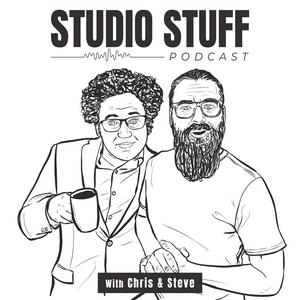
The Studio Stuff Podcast is your go-to home studio hangout, where music production, mixing, recording, and mastering meet real talk, practical advice, and the occasional lousy jokes. Hosted by Chris Selim and Steve Dierkens, this isn’t a dry, technical lecture—it’s a laid-back, no-BS conversation about making great music with the gear you actually have.
Expect real-world insights, gear, and technique debates, plugin obsessions, and plenty of laughs along the way. Plus, we love hearing from you! Send in your questions, and let’s figure this whole studio stuff thing out together.
Podcast-WebsiteHöre Studio Stuff, {ungeskriptet} - Der Meinungsfreiheit verpflichtet. und viele andere Podcasts aus aller Welt mit der radio.de-App
Hol dir die kostenlose radio.de App
- Sender und Podcasts favorisieren
- Streamen via Wifi oder Bluetooth
- Unterstützt Carplay & Android Auto
- viele weitere App Funktionen
Hol dir die kostenlose radio.de App
- Sender und Podcasts favorisieren
- Streamen via Wifi oder Bluetooth
- Unterstützt Carplay & Android Auto
- viele weitere App Funktionen
Studio Stuff
Code scannen,
App laden,
loshören.
App laden,
loshören.
 Deutschland