
Höre diesen Podcast kostenlos in der App: Kostenlos im App Store laden
radio.de
Sleeptimer
Sender speichern
150 Episoden
“You Can See Everything” and the Nathan Fielder Effect
22.10.2026 | 53 Min.Nathan Fielder’s onscreen persona—flat, literal-minded, and seemingly baffled by ordinary social behavior—has made him one of our most distinctive cultural figures. On his Comedy Central series “Nathan for You,” his approach collided with the eagerness of ordinary people to be agreeable, and on the HBO series “The Rehearsal,” it became a kind of social science, as Fielder staged elaborate simulations of real life. Fielder’s latest project, “You Can See Everything,” a documentary he made with the director Lance Oppenheim, trains that deadpan gaze on Elizabeth Holmes, the disgraced founder of Theranos, who invited the filmmakers into her home in the weeks before she reported to prison for defrauding investors. On this episode of Critics at Large, Vinson Cunningham, Naomi Fry, and Alexandra Schwartz discuss the film and the strange mirroring between its two central figures: Fielder, performing an unnerving bluntness, and Holmes, wide-eyed and doll-like, who seems to remember almost nothing and insists she did nothing wrong. The hosts also consider what the movie says about the documentary form itself, and whether it can, or should, get at the truth. And with “You Can See Everything” earning fifteen million dollars in its opening weekend, a remarkable figure for a documentary, they ask what it says about us as viewers that we’re so caught in Fielder’s web. Schwartz says it speaks to “our very human need to trust people while knowing that no one is really fundamentally trustworthy, but wanting everyone to be.” As she puts it, “We’re all kind of on trial here, too.”
Read, watch, and listen with the critics:
“You Can See Everything” (2026)
“We Can Never Understand Elizabeth Holmes, or Nathan Fielder,” by Naomi Fry (The New Yorker)
“Lance Oppenheim Is Going Places,” by Alex Barasch (New York)
“Spoiler Alert: Keeping Movies Under Wraps,” by Richard Brody (The New Yorker)
“Nathan For You” (2013-17)
“The Rehearsal” (2022-)
New episodes drop every Thursday. Follow Critics at Large wherever you get your podcasts.
Critics at Large is a weekly discussion from The New Yorker that explores the latest trends in books, television, film, and more. Join us every Thursday as we make unexpected connections between classic texts and pop culture.
Learn more about your ad choices. Visit podcastchoices.com/adchoices“The Social Reckoning” Shows How It All Went Wrong
08.10.2026 | 50 Min.In 2010, Time magazine’s Person of the Year was not a world leader or entertainment icon but Mark Zuckerberg, the twenty-six-year-old creator of Facebook. That same year, Zuckerberg got the Hollywood treatment in the bio-pic “The Social Network,” directed by David Fincher and written by Aaron Sorkin. On this episode of Critics at Large, Vinson Cunningham, Naomi Fry, and Alexandra Schwartz revisit “The Social Network,” which put forward an origin story for the company, captivating audiences and becoming a cultural touchpoint in the process. They compare it to Sorkin’s new film, “The Social Reckoning,” which dramatizes whistle-blowing by the former Facebook employee Frances Haugen and the resulting bombshell investigation conducted by the Wall Street Journal in 2021. In the earlier film, Jesse Eisenberg played Zuckerberg as a lonely, ambitious genius—a stark contrast to Jeremy Strong’s portrayal, in “The Social Reckoning,” of a man who puts profits before people at every turn. At its best, the new film functions as its own form of whistle-blowing. “The best reason to watch ‘The Social Reckoning’ is that a lot of people still don't understand some of these things about this company,” Cunningham says. “I do wonder if a kind of news-giving or news-bringing, however belated . . . is a salutary effect of these portrayals.”
Read, watch, and listen with the critics:
“The Social Network” (2010)
“The Social Reckoning” (2026)
“The Facebook Files” (The Wall Street Journal)
"Succession” (2018-23)
“Aaron Sorkin Made a Movie About Her. She Just Hopes Mark Zuckerberg Watches.” by Seija Rankin (The Hollywood Reporter)
"As Big Tech Takes Over Hollywood, the Picture Onscreen Gets Darker," by Alissa Wilkinson (The New York Times)
“Silicon Valley” (2014-19)
“Careless People: A Cautionary Tale of Power, Greed, and Lost Idealism,” by Sarah Wynn-Williams
“Don't Be Evil: Bad Bosses, Fake Promises, and My Escape from Big Tech,” by Claire Stapleton
“Edward Snowden and the Rise of Whistle-Blower Culture,” by Jill Lepore (The New Yorker)
“Data center opposition a rare issue uniting Americans across the political divide,” (60 Minutes)
New episodes drop every Thursday. Follow Critics at Large wherever you get your podcasts.
Critics at Large is a weekly discussion from The New Yorker that explores the latest trends in books, television, film, and more. Join us every Thursday as we make unexpected connections between classic texts and pop culture.
Learn more about your ad choices. Visit podcastchoices.com/adchoicesTom Cruise-a-Palooza
01.10.2026 | 56 Min.Tom Cruise is often said to be the last of a dwindling breed: the true movie star. On this episode of Critics at Large, Vinson Cunningham, Naomi Fry, and Alexandra Schwartz consider the performances that have earned him that designation. The hosts are joined by Tyler Foggatt, a senior editor at The New Yorker and a die-hard “Cruise-head,” who breaks down the chapters of the actor’s career. The early “heartthrob years,” marked by films like “Risky Business” and “The Color of Money,” established Cruise’s appeal onscreen and catapulted him into projects with respected directors such as Stanley Kubrick and Paul Thomas Anderson. Cruise’s affiliation with the Church of Scientology might have torpedoed the career of a different celebrity, but he remains irresistible to audiences, who have shown up at the box office throughout the past decade of his career—which has largely been defined by action flicks and jaw-dropping stuntwork. In “Digger,” the polarizing new film directed by Alejandro González Iñárritu, Cruise’s performance as a potbellied, aging oil baron is a rare departure from his usual fare. Might it signal another reinvention? “Cruise will probably default back to the formula that he knows works,” Foggatt says. “But maybe we'll get a couple ‘Digger’s between now and then.”
Read, watch, and listen with the critics:
“Digger” (2026)
“Risky Business” (1983)
“The Color of Money” (1986)
“Cocktail” (1988)
“Jerry Maguire” (1996)
“Born on the Fourth of July” (1989)
“Magnolia” (1999)
“Valkyrie” (2008)
The “Mission: Impossible” movies (1999-)
“War of the Worlds” (2005)
New episodes drop every Thursday. Follow Critics at Large wherever you get your podcasts.
Critics at Large is a weekly discussion from The New Yorker that explores the latest trends in books, television, film, and more. Join us every Thursday as we make unexpected connections between classic texts and pop culture.
Learn more about your ad choices. Visit podcastchoices.com/adchoicesWhat Survival Stories Tell Us (and Should We Listen?)
24.09.2026 | 50 Min.On this episode of Critics at Large, Vinson Cunningham, Naomi Fry, and Alexandra Schwartz discuss the perennial appeal of survival stories. They trace the theme of man versus nature from early novels like Daniel Defoe’s “Robinson Crusoe” to new releases like “Heart of the Beast,” in which Brad Pitt plays a grizzled veteran traversing the Alaskan wilderness with a canine companion. Survivalist themes are common in reality franchises like “Survivor,” now in its fifty-first season, and the History Channel show “Alone.” But a new offering from Channel 4, “Apocalypse,” takes the format in a darker direction: contestants profess their fears about societal collapse as they compete for food and shelter on an abandoned military base. As anxiety rises about the climate crisis and the potential for an A.I. takeover, the question of survival seems more pressing than ever—and yet these tales of rugged individualism can seem out of step with the times. “They don’t really describe our condition,” Cunningham says. “Unless you are in fact marooned somewhere, there are other people. It’s harder to dramatize surviving together than it is surviving alone.”
Read, watch, and listen with the critics:
“Heart of the Beast” (2026)
“A Marriage at Sea: A True Story of Love, Obsession, and Shipwreck,” by Sophie Elmhirst
“All is Lost” (2013)
“Hatchet,” by Gary Paulsen
“My Side of the Mountain,” by Jean Craighead George
“Island of the Blue Dolphins,” by Scott O'Dell
“Cast Away” (2000)
“Rescue Dawn” (2006)
“The Ecstatic Truth,” by Daniel Zalewski (The New Yorker)
“The Rise of the Novel: Studies in Defoe, Richardson and Fielding,” by Ian Watt
“The Revenant” (2015)
“Little House in the Big Woods,” by Laura Ingalls Wilder
“Alone” (2015-)
“Survivor” (2000-)
“Apocalypse” (2026)
“Tuesday, and After” (The New Yorker)
New episodes drop every Thursday. Follow Critics at Large wherever you get your podcasts.Critics at Large is a weekly discussion from The New Yorker that explores the latest trends in books, television, film, and more. Join us every Thursday as we make unexpected connections between classic texts and pop culture.
Learn more about your ad choices. Visit podcastchoices.com/adchoicesIntroducing: “The Journey,” from In the Dark
20.09.2026 | 56 Min.“The Journey,” a five-part audio investigation by Ava Kofman, unravels the mystery of how Guojun Xuan and Silvia Zhang, a wealthy Los Angeles couple, obtained dozens of children through nearly as many surrogates—and exposes a scandal that threatens to undermine the entire surrogacy industry.
In Episode 1, “Gifts,” a woman in Texas agrees to carry a child for the couple. She thinks she’s helping a family in need. Then she becomes a whistle-blower.
In the Dark is an acclaimed investigative-journalism podcast that launched in 2016. Its third season won the 2025 Pulitzer Prize for audio.
To keep listening to “The Journey,” search for In the Dark wherever you get your podcasts.
Learn more about your ad choices. Visit podcastchoices.com/adchoices
Weitere Gesellschaft und Kultur Podcasts


Trending Gesellschaft und Kultur Podcasts





















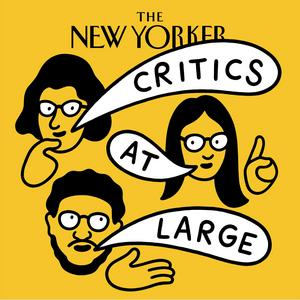
Über Critics at Large | The New Yorker
Critics at Large is a weekly culture podcast from The New Yorker. Every Thursday, the staff writers Vinson Cunningham, Naomi Fry, and Alexandra Schwartz discuss current obsessions, classic texts they’re revisiting with fresh eyes, and trends that are emerging across books, television, film, and more. The show runs the gamut of the arts and pop culture, with lively, surprising conversations about everything from Salman Rushdie to “The Real Housewives.” Through rigorous analysis and behind-the-scenes insights into The New Yorker’s reporting, the magazine’s critics help listeners make sense of our moment—and how we got here.
Podcast-WebsiteHöre Critics at Large | The New Yorker, Seelenfänger und viele andere Podcasts aus aller Welt mit der radio.de-App
Hol dir die kostenlose radio.de App
- Sender und Podcasts favorisieren
- Streamen via Wifi oder Bluetooth
- Unterstützt Carplay & Android Auto
- viele weitere App Funktionen
Hol dir die kostenlose radio.de App
- Sender und Podcasts favorisieren
- Streamen via Wifi oder Bluetooth
- Unterstützt Carplay & Android Auto
- viele weitere App Funktionen

Critics at Large | The New Yorker
Code scannen,
App laden,
loshören.
App laden,
loshören.
Critics at Large | The New Yorker: Zugehörige Podcasts
 Deutschland