
Höre diesen Podcast kostenlos in der App: Kostenlos im App Store laden
radio.de
Sleeptimer
Sender speichern
160 Episoden
Digitizing the Shelf: Simbe's Store Intelligence with Caitlin Allen
21.10.2026 | 49 Min.Retailers know what enters their stores and what leaves them, but what happens in between has traditionally been a major data blind spot. Caitlin Allen, SVP of Marketing at Simbe Robotics, joins Greg to explore how robots, computer vision, and shelf intelligence are helping retailers finally understand what is happening inside the aisle and turn that visibility into measurable business outcomes.
Caitlin has spent two decades building markets around disruptive technologies, from medical technology and enterprise software to roles at Andreessen Horowitz, Lyft, and now robotics. Across those experiences, one lesson has remained consistent: great technology is not enough. Creating a new category means helping customers understand why they need to change, giving them confidence to act, and building the organizational support required to make that change stick.
At Simbe, that means looking beyond Tally as simply an inventory robot. The company’s platform uses robotics and other sensing technologies to detect what is happening on the shelf, determine what needs attention, direct teams toward action, and confirm that the problem has been resolved. The result is a continuously improving source of shelf data that can support everything from pricing and replenishment to ecommerce fulfillment, demand forecasting, and the broader move toward self-optimizing stores.
In this conversation, Greg and Caitlin explore:
Caitlin’s unconventional path from medical technology and entrepreneurship to Andreessen Horowitz, Lyft, and eventually retail robotics
Why category creation starts with showing buyers the cost of standing still before asking them to embrace something new
The balance between FOMO, the fear of missing out, and the fear of messing up when introducing disruptive technology
Why the retail shelf remains one of the industry’s biggest data blind spots, and how digitizing it can unlock value across the entire retail ecosystem
How Tally uses autonomous shelf scanning to identify misplaced products, pricing issues, gaps, and other problems that are difficult to capture consistently with manual processes
Why 60% of products grocers believe are out of stock may actually be somewhere else inside the store
The four stages of Simbe’s platform: detecting what is happening, determining what it means, directing the right action, and confirming that the action was completed
How retailers decide between autonomous robots, fixed cameras, and RFID depending on data fidelity, product type, and how frequently information needs to be captured
Why one large grocer projected hundreds of millions of dollars in savings from shelf intelligence, and why autonomous mobile robots produced significantly fewer errors than alternative scanning approaches
How improved computer vision, longer battery life, and edge computing in Tally 4.0 expand what retailers can see and how quickly they can act on that information
Why public retail environments are uniquely difficult for robotics, with changing displays, spills, shoppers, children, and unpredictable movement all sharing the same space
The human-centered design thinking behind Tally, including how the team studied what makes a penguin appear friendly when designing a robot people would feel comfortable around
Why earning trust is a prerequisite to delivering value when robots operate directly alongside shoppers and employees
The importance of change management in robotics deployments, and why leadership alignment, repeated communication, clear KPIs, and integration into existing workflows can matter as much as the technology itself
How successful retailers use automation to remove repetitive tasks while giving store employees more time for higher-value, human work
Why long enterprise sales cycles require robotics companies to build relationships across multiple stakeholders instead of relying on a single internal champion
How Caitlin thinks about events, category creation, strategic advisory boards, and building a go-to-market engine that can compete with companies that have much larger budgets
Why robotics companies should make the customer the hero of their storytelling rather than leading with their own technology
Caitlin’s advice for physical AI founders: own the architecture of the problem, choose investors who believe in the long-term vision, and find early customers willing to build alongside you
For robotics founders, marketers, retail leaders, and anyone trying to bring an unfamiliar technology into a traditional industry, this conversation is a practical look at what it takes to turn sophisticated robotics into adoption, measurable outcomes, and ultimately a new market category.
Learn more about Simbe Robotics: https://www.simberobotics.com/
Connect with Caitlin Allen on LinkedIn: https://www.linkedin.com/in/caitlinrallen/
Connect with Greg Toroosian: https://www.linkedin.com/in/gregtoroosian/One Platform for Humans, Robots, and AVs with Johan Land
14.10.2026 | 49 Min.The next frontier of AI will not be confined to screens. It will live in trucks, warehouses, construction sites, factories, roads, and the countless physical operations that keep the world moving.
Johan Land, Chief Product Officer at Samsara, joins Greg to explore what happens when AI meets the messy reality of the physical world. Drawing on a career spanning Google, YouTube, Waymo, TomTom, Kobalt Music, and now Samsara, Johan shares why learning has been the thread connecting every stage of his journey, and why staying relevant in the current AI era requires continuously testing the limits of what new models can actually do.
At Samsara, that challenge means connecting cameras, sensors, vehicles, machines, and workers, turning enormous amounts of real-world data into insights, then using AI agents to act on those insights. Johan explains why the final step, autonomous action, is also the hardest, especially when AI systems are making judgment calls involving driver safety, industrial operations, and potentially life-or-death situations.
In this conversation, Greg and Johan explore:
Why Johan believes most people underestimate how capable AI models already are, and why even a few months can leave your understanding out of date
How constant experimentation and building custom model harnesses help him understand where the frontier of AI actually is
The lessons Johan took from helping transform Waymo from a research project into an operating service, particularly why the long tail of edge cases determines whether AI works in the real world
Why physical AI starts with data, and how Samsara uses cameras, sensors, machines, vehicles, and human inputs to build a real-time picture of physical operations
How Samsara layers analytics and AI agents on top of that data to identify problems, guide decisions, and increasingly take action on behalf of operators
Why autonomous agents are harder than analytics, especially when AI must make judgment calls around safety, escalation, compliance, and human behavior
How Samsara detects driver drowsiness over time and uses conversational AI to intervene before fatigue becomes an accident
The balance between edge and cloud AI, including why millisecond safety decisions must happen locally while more complex reasoning can happen in the cloud
How massive amounts of video and sensor data unlock better models, richer edge-case coverage, asset tracking, and an increasingly real-time view of the physical world
Why voice and two-way audio could become one of the most powerful interfaces for AI in jobs where workers need their hands free
The engineering challenges behind putting 360-degree cameras, significant compute, and edge AI into equipment operating in harsh physical environments
How customers continually discover unexpected applications for Samsara technology, from tracking high-value inventory to monitoring assets throughout supply chains
Why Johan believes mixed autonomy will arrive incrementally, with human workers, traditional machines, autonomous vehicles, and eventually humanoid robots operating together
The case for a separate orchestration layer that can normalize data and workflows across vehicles and machines from many different manufacturers
Why Johan pushes back on the idea that hardware is becoming a commodity, and why tightly integrating hardware, software, optics, and AI models can produce better performance and clearer accountability
What he believes physical AI companies often get wrong: impressive demos are not the same as reliable, repeatable value in real-world operations
How Samsara organizes hardware, software, and AI teams around fundamentally different development cycles while keeping them tightly connected
What Johan looks for in product leaders, including deep customer understanding, commercial instinct, high agency, relentless ownership, and a willingness to spend time inside the operations they are building for
His advice for physical AI founders: relationships, credibility, trust, financial stability, and customer connection matter far more than many technology-first startups initially expect
Why Johan believes humanoids will be working on real job sites by 2030, even if human intuition struggles to keep pace with exponential technological progress
For anyone building AI, robotics, industrial technology, or products that must work outside controlled environments, this conversation offers a practical look at the gap between technological capability and real-world impact, and what it takes to close it.
Learn more about Samsara: https://www.samsara.com/
Connect with Johan Land on LinkedIn: https://www.linkedin.com/in/johanland/
Connect with Greg on LinkedIn: https://www.linkedin.com/in/gregtoroosian/Selling Airspace Awareness Before the Market Knows It Needs It with Melissa Swisher
07.10.2026 | 52 Min.Having the best technology does not guarantee you win. Customers do not buy engineering. They buy outcomes.
Melissa Swisher, Chief Revenue Officer at SkySafe, joins Greg to explore what it takes to turn sophisticated technology into a repeatable business, and why that challenge is becoming increasingly important as drones become a routine part of the world around us.
Melissa brings decades of experience building and scaling go-to-market organizations across enterprise software, healthcare technology, AI, and now airspace intelligence. Her career has included high-growth companies, IPOs, founding and successfully exiting Socrates AI, and learning firsthand how culture, focus, and customer understanding can determine whether a technically impressive company actually succeeds.
At SkySafe, Melissa has helped move the business from experimentation toward a focused, scalable go-to-market model. Since joining, the company has quadrupled revenue and grown from a handful of customers to roughly 50 by narrowing its focus, creating clearer buying motions, and building around federal, public safety, law enforcement, and critical infrastructure customers.
The conversation also explores the rapidly changing world above us. As drones become cheaper, more capable, and more common, organizations increasingly need visibility beyond the traditional fence line. SkySafe is building an intelligence network designed not simply to detect a drone, but to understand where it came from, whether it has appeared before, how it behaves, and what patterns emerge across locations over time.
Greg and Melissa get into:
Why having the best technology is not enough to win, and why customers ultimately buy outcomes rather than engineering
Melissa’s journey from enterprise sales and leadership to founding Socrates AI and eventually joining SkySafe
How mentors shaped her career and why she now pushes people into bigger opportunities before they necessarily feel ready
What dramatically different company cultures taught her about accountability, collaboration, customer focus, and why culture directly drives performance
Why SkySafe needed to move from experimentation to scale by creating greater focus, clearer qualification, and repeatable buying motions
The power of saying no, and why startups can die from having too many good ideas
How SkySafe detects drones and turns individual detections into a broader airspace intelligence network
Why the company focuses on persistent detection and intelligence rather than treating every unidentified drone as a threat
How networked RF sensing can reveal patterns, history, and behavior that a standalone sensor cannot
Why drone forensics can turn airspace data from a monitoring tool into an investigative asset for law enforcement
The emerging opportunity around critical infrastructure, including energy, utilities, oil and gas, and data centers
How disciplined execution helped SkySafe quadruple revenue, and why growth often comes from doing the boring, repeatable things consistently well
What Melissa looks for when hiring go-to-market talent, including curiosity, hunger, adaptability, and comfort with ambiguity
Her advice to technical founders whose go-to-market strategy is struggling: stop selling to everybody, identify who has an urgent problem they will pay to solve now, and build repeatability before expanding
Why a use case is not the same thing as a market, and why technical founders should bring commercial leadership into the business earlier
What nationwide airspace awareness could eventually look like as cities, critical infrastructure, public safety, and federal organizations become part of a broader intelligence network
Why Melissa believes meaningful career decisions often feel uncomfortable before they feel obvious
For robotics, hard tech, and AI founders trying to turn technical capability into a scalable business, this conversation is a practical look at focus, category creation, go-to-market discipline, and the importance of knowing which opportunities to pursue and which ones to leave behind.
Learn more about SkySafe:
https://www.skysafe.io/
https://www.linkedin.com/company/skysafe/
Connect with Melissa on LinkedIn: https://www.linkedin.com/in/melissa-swisher-00480a/
Connect with Greg on LinkedIn: https://www.linkedin.com/in/gregtoroosian/The Lawyer Who Writes Robotics' Rulebook with Michael Bearman
30.09.2026 | 43 Min.There’s a huge difference between making a robot work in a lab and making it reliable enough to survive the chaos of a real warehouse. For Michael Bearman, Chief Legal and Safety Officer at Vecna Robotics, closing that gap has been a 23-year journey spanning legal, operations, customer deployments, fundraising, safety, and industry standards.
Michael joins Greg to share how he went from outside counsel to becoming one of Vecna’s longest-serving leaders, taking on everything from contracts and customer implementations to financial modeling and even an all-night soldering session before a robot demonstration at Congress. That willingness to jump into unfamiliar problems gave him a front-row seat as Vecna evolved from experimental robotics projects into industrial automation deployed across warehouses and manufacturing facilities.
They explore why impressive robotics demos are very different from commercially viable products, how an early rescue robot helped Vecna learn that lesson firsthand, and why a major FedEx deployment pushed the company toward industrial mobile robots. Michael also breaks down Vecna’s approach to automated forklifts, tuggers, and CaseFlow, including how one customer doubled throughput with half the staff by rethinking the traditional case-picking workflow.
In this conversation, Greg and Michael explore:
Michael’s unconventional journey from outside legal counsel to Chief Legal and Safety Officer, and the many operational, financial, customer, and leadership roles he took on along the way
Why there is such a large gap between a successful robotics demonstration and a system that customers can rely on in real-world industrial environments
How Vecna’s early Bear rescue robot helped build the technology, team, and relationships that eventually supported its pivot into industrial robotics
The FedEx deployment that put more robots into a single site than Vecna’s entire existing fleet and helped reshape the company’s direction
How automated tuggers, forklifts, and CaseFlow tackle different material-handling workflows across manufacturing, automotive, and third-party logistics
Why close collaboration with an early 3PL customer helped Vecna build CaseFlow around the realities of warehouse case picking, ultimately doubling throughput with half the staff at that customer
How flexible Robots as a Service models allow 3PL customers to scale fleets up and down around seasonal peaks instead of paying for idle robots year-round
What Michael looks for during on-site safety risk assessments, from pedestrian traffic and crosswalks to routes that may look good in CAD but fail in the real warehouse
Why interoperability matters as warehouses deploy robots from multiple vendors, and how Michael helped shape the MassRobotics AMR interoperability standard that has now progressed into an international ISO standard
The challenges of writing safety standards for everything from multi-ton industrial robots to dynamically balancing humanoid and legged systems
Why spending time inside real customer facilities has made Michael a better lawyer, safety leader, and contributor to robotics standards
What Vecna looks for when hiring in a startup environment, including intelligence, flexibility, curiosity, and a willingness to figure things out rather than staying inside a narrowly defined role
Why customer trust depends on transparency when something goes wrong, and why hiding information is one of the fastest ways for a robotics company to lose that trust
Michael’s view that warehouses will continue to need people for edge cases, even as automation expands, with human workers increasingly supporting fleets rather than performing every task manually
Why robotics founders cannot afford to cut corners on safety, especially when a single serious incident can have enormous consequences for a young company
For robotics founders, operators, engineers, and anyone trying to move automation from a controlled demo into messy real-world environments, this conversation offers a practical look at what reliability, safety, interoperability, and customer trust actually require.
Learn more about Vecna Robotics: https://www.vecnarobotics.com/
Connect with Vecna Robotics: https://www.linkedin.com/company/vecna-robotics/posts/
Connect with Michael Bearman: https://www.linkedin.com/in/bearman/
Connect with Greg Toroosian: https://www.linkedin.com/in/gregtoroosian/The Visual Cortex of Physical AI with Chris Matthieu
23.09.2026 | 48 Min.What happens when AI agents stop living entirely on screens and start controlling cameras, wheels, motors, and eventually full robotic bodies?
Chris Matthieu, VP of Developer Ecosystem at RealSense, joins Greg to explore the rapidly converging worlds of AI agents, computer vision, robotics, and physical intelligence. A lifelong hacker who started programming on a Commodore VIC-20 as a kid, Chris has spent more than four decades building technology, including five startup exits, before joining Intel as an entrepreneur in residence and eventually helping grow the RealSense developer ecosystem.
Chris shares how his fascination with connected machines evolved from IoT platforms and decentralized computing into his latest project, AgenticROS, an experimental system that gives AI agents direct access to ROS and allows them to perceive and control physical robots. His robot Bob can already use camera data to identify where Chris is, calculate his position, control its wheels, and follow him through a room without Chris explicitly programming every behavior.
Greg and Chris also dig into RealSense’s evolution from an Intel incubator project into an independent company, why depth perception is becoming foundational infrastructure for physical AI, and how open source software, cheaper hardware, and AI coding tools are dramatically lowering the barrier to building real robotic systems.
Highlights:
Chris’s journey from hacking on Commodore computers as a child to building and exiting five technology startups before moving into Intel and RealSense. - Why builders who avoid ROS can end up recreating infrastructure that already exists, and why the broader ROS ecosystem can dramatically accelerate robotics development.
How AgenticROS connects tools such as Claude, Codex, Gemini, and other AI agents directly to ROS, giving them access to cameras, perception data, and robot controls.
Why Chris believes increasingly capable AI models may eventually control robotic bodies without developers having to explicitly program every movement or create a predefined skill for every task.
The startup lesson Chris learned at Intel: stop building technology in search of a market and instead start with painful customer problems people are willing to pay to solve.
Why timing played such an important role in spinning RealSense out of Intel, especially as generative AI, physical AI, and robotics began accelerating simultaneously.
How RealSense depth cameras give robots an RGBD view of the world by calculating depth at every pixel, while increasingly moving AI and perception processing directly onto the camera itself.
How open source SDKs and AI code generation are shrinking prototype timelines from weeks or months to hours, allowing developers to validate ideas far more quickly.
Why side projects, GitHub activity, curiosity, and building in public can be some of the strongest signals for engineers looking to break into robotics and physical AI.
How one experimental LinkedIn post about Chris’s robot generated roughly 180,000 impressions and led to NVIDIA webinars, conference talks, and unexpected opportunities.
Why individual developers can sometimes validate ideas faster than large companies, especially when AI coding tools, inexpensive cameras, Raspberry Pis, and NVIDIA Jetsons make functional robotics prototypes accessible for hundreds rather than tens of thousands of dollars.
Chris’s philosophy of failing fast, testing the market early, and recognizing when either the technology or the customer demand is not ready yet.
Why he believes the enormous funding rounds flowing into physical AI may reflect the scale of the potential market, even while competing approaches such as VLAs, world models, and skill-based systems are still evolving.
His advice for anyone entering robotics: start with an inexpensive desktop robot, experiment with it, and remember that complex robots are ultimately systems of smaller components working together.
Where Chris hopes physical AI ultimately leads: robots that understand the people around them, safely operate in human environments, and perhaps finally bring him coffee in the morning and a beer in the evening.
For developers, founders, students, and anyone curious about where AI goes after the chatbot, this conversation offers a hands-on look at how rapidly robotics is becoming easier to prototype, program, and experiment with, and why the next wave of AI may increasingly have cameras, wheels, arms, and a physical presence.
Learn more about RealSense: https://www.realsenseai.com/
Learn more about AgenticROS: https://agenticros.com/
Connect with Chris Matthieu on LinkedIn: https://www.linkedin.com/in/chrismatthieu/
Connect with Greg Toroosian: https://www.linkedin.com/in/gregtoroosian/
Weitere Technologie Podcasts







Trending Technologie Podcasts














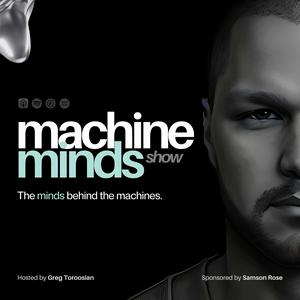
Über Machine Minds
Machine Minds - the minds behind the machines! This is the show where we dive deep into the intricate worlds of robotics, AI, and Hard Tech. In each episode, we bring you intimate conversations with the founders, investors, and trailblazers who are at the heart of these tech revolutions. We dig into their journeys, the challenges they've overcome, and the breakthroughs that are shaping our future. Join us as we explore how these machine minds are transforming the way we live, work, and understand our world.
Podcast-WebsiteHöre Machine Minds, Flugforensik - ein Absturz und seine Geschichte und viele andere Podcasts aus aller Welt mit der radio.de-App
Hol dir die kostenlose radio.de App
- Sender und Podcasts favorisieren
- Streamen via Wifi oder Bluetooth
- Unterstützt Carplay & Android Auto
- viele weitere App Funktionen
Hol dir die kostenlose radio.de App
- Sender und Podcasts favorisieren
- Streamen via Wifi oder Bluetooth
- Unterstützt Carplay & Android Auto
- viele weitere App Funktionen
Machine Minds
Code scannen,
App laden,
loshören.
App laden,
loshören.
 Deutschland

