

Höre diesen Podcast kostenlos in der App: Kostenlos im App Store laden
radio.de
Sleeptimer
Sender speichern
146 Episoden
Episode 145 | AI and the Documentary Filmmaker | With Philip Shane
02.09.2026 | 48 Min.Episode Summary
How can documentary filmmakers actually use AI—and where does it belong in the creative process?
Artificial intelligence is rapidly becoming part of the filmmaking toolkit, but beneath the hype and anxiety are practical questions: What can these tools genuinely help us do? Where do they fall short? And how do we embrace new technology without losing sight of the human judgment and creativity at the heart of documentary filmmaking?
In this episode of The Documentary Life, Chris G. Parkhurst is joined by award-winning documentary filmmaker, editor, and AI educator Philip Shane for a practical exploration of AI across the documentary workflow. They discuss using AI for research, brainstorming, interview preparation, transcript analysis, story development, B-roll and visual creation, music, voice generation, translation, and post-production—while also confronting its current limitations and the larger concerns surrounding copyright and creative authorship.
Drawing on nearly four decades of filmmaking and his own experience navigating earlier technological revolutions, Philip offers a useful perspective for filmmakers feeling overwhelmed by the speed of change: you don't need to use every new tool, but understanding what's possible allows you to make informed choices about what belongs in your own work. Ultimately, AI is another tool. The filmmaker still decides how—and whether—to use it.
In This Episode
Why AI may be the next major technological shift in documentary filmmaking
Practical ways filmmakers can use AI for research and story discovery
Brainstorming interview questions, outlines, and documentary structure with AI
Using transcripts and AI to find important moments buried in hours of footage
AI-generated B-roll, reenactments, and the questions they raise for nonfiction
Creating music, voices, translations, and other post-production elements with AI
Why working with AI requires iteration—not simply asking for an answer
How documentary filmmakers can embrace new tools without surrendering creative judgment
Chapters
00:00 – Why AI feels like the next filmmaking revolution
09:13 – Meet documentary filmmaker and AI educator Philip Shane
11:29 – How AI compares to earlier technological shifts in filmmaking
16:15 – What filmmakers misunderstand about AI
20:52 – Using AI for research, brainstorming, and story discovery
25:30 – AI in editing, B-roll, and documentary reenactments
30:08 – The AI tools documentary filmmakers are using now
34:46 – Using AI to find stories buried inside hours of footage
37:03 – AI-generated music, voices, and translation
41:23 – How filmmakers can learn AI without becoming overwhelmed
43:48 – Why AI requires collaboration, iteration, and creative judgment
46:08 – Philip Shane’s AI resources for documentary filmmakers
Featured Guest
Philip Shane is an award-winning documentary filmmaker, producer, director, editor, and educator with more than 35 years of experience in nonfiction storytelling. His credits include the Sundance Special Jury Prize-winning Being Elmo, Einstein, and Dancing in Jaffa, for which he received the Best Editing Award at the DocAviv Film Festival. Earlier in his career, Philip worked extensively in broadcast journalism at ABC News, contributing to programs that received both a duPont-Columbia Award and an Emmy. In recent years, he has become a speaker and educator on the use of artificial intelligence in documentary filmmaking, teaching filmmakers how emerging AI tools can be used across research, writing, imagery, audio, and post-production. Drawing on decades spent navigating technological change, Philip brings a filmmaker’s perspective to AI—focused not simply on what these tools can do, but on how documentary storytellers can use them thoughtfully, creatively, and with intention.
Desktop Documentaries
Documentary Filmmaker's AI Playbook (2026)
A four-part on-demand AI class created for documentary filmmakers.
Get more than nine hours of lessons, including a bonus session on the Midjourney editor.
Learn real workflows and current tools, with zero hype, from Sundance award-winning documentary filmmaker Philip Shane.
Doc AI Hub
Learn how documentary filmmakers are really using AI.
Doc AI Hub gives you live sessions, replays and curated updates to help you keep up with AI while staying focused on your film.
Intro Offer: 50% off your first month
Learn More
📖 The Documentary Life Field Guide
"I've put together the free guide I wish someone had handed me when I first picked up a camera."
Download here:
The Documentary Life Field Guide
📺 Watch on YouTube
Watch the full conversation here:
https://www.youtube.com/watch?v=XK36-4zfrAE
🎙 Listen to More Episodes
Related episodes:
✉ Join the Newsletter
Receive weekly reflections, podcast updates, documentary resources, and practical advice for nonfiction filmmakers.
Sign up here
Support The Documentary Life
If you're enjoying the show, there are a few simple ways to support it:
• Subscribe
• Leave a review
• Share the episode with another filmmaker
• Join the newsletter
Connect
Website
Newsletter
Instagram
LinkedIn
YouTube
Barang Films
Quotes from the Episode
"The tools of documentary filmmaking will always change. The work is learning how to change with them, without losing sight of why we picked up a camera in the first place." — Chris G. Parkhurst
"You realize, it's a tool... You're sitting there and you're working with it. You're molding it and shaping it." — Philip Shane
"No AI has edited well yet." — Philip Shane
"Technological change is just part of the deal." — Philip Shane
"Eventually, if you don't already, you'll see it as just another tool... and in fact, you don't have to use it, and you don't have to use all of it." — Philip Shane
About The Documentary Life
The Documentary Life is a podcast exploring the craft, business, and lived experience of documentary filmmaking. Through conversations with filmmakers from around the world, host Chris G. Parkhurst explores not only how documentaries are made, but what it means to build a meaningful, sustainable creative life.
And Lastly…
Stories matter. Listening matters. Human connection matters.
Thanks for spending part of your documentary life with us.Episode 144 | The Ethics Lab: Access, Consent & Trust | With Alan Berry & Mark Enochs
19.08.2026 | 46 Min.Episode Summary
What does it mean when someone trusts you with their story?
Access may get a documentary filmmaker through the door, but it is only the beginning. The deeper responsibility lies in earning trust, maintaining it throughout production, and making ethical decisions about another person's story long after the interview ends.
In this episode of The Documentary Life, Chris G. Parkhurst is joined by filmmakers Alan Berry and Mark Enochs, directors of Dead Man's Line, for a practical conversation about access, consent, and trust in documentary filmmaking. Drawing from their experience interviewing law enforcement, family members, journalists, and others connected to an extraordinary Indianapolis hostage case, they explore how relationships are built before the camera rolls, why keeping promises to participants matters, what happens when difficult material emerges in an interview, and how filmmakers navigate subjects who may not agree with the finished film.
Rather than offering a simple set of ethical rules, this conversation examines documentary ethics as an ongoing human relationship—one requiring honesty, humility, clear communication, and an understanding that being entrusted with someone's story carries responsibilities that can continue long after the cameras stop rolling.
In This Episode
Why access is only the beginning of a documentary relationship
Building trust before the camera ever starts rolling
How honesty, preparation, and credibility help earn access
Setting clear expectations with documentary participants
Keeping promises when difficult material emerges in the edit
Navigating subjects who disagree with the finished film
The filmmaker’s responsibility to participants after production ends
Why documentary ethics ultimately comes down to how we treat people
Chapters
00:00 – The first moment of access: how documentary relationships begin
02:00 – Building trust before the camera starts rolling
04:35 – When access becomes earned access
13:41 – Living inside the relationship with your subjects
16:54 – Setting expectations and keeping promises to participants
19:06 – Ethical decisions filmmakers face in the edit
23:31 – What happens when subjects see the finished film?
28:04 – How Dead Man’s Line made its way to Hollywood
37:04 – Loyalty, collaboration, and the long road to Dead Man’s Wire
40:19 – The ultimate trust test—and what documentary filmmakers can learn from it
Featured Guests
Alan Berry and Mark Enochs are longtime friends and the filmmaking team behind Dead Man’s Line, a documentary exploring the extraordinary 1977 Indianapolis hostage crisis involving Tony Kiritsis. Through extensive archival material and interviews with law enforcement officers, journalists, legal professionals, family members, and others connected to the case, they built the film by earning access one relationship at a time. Their experience offers a valuable case study in the practical ethics of documentary filmmaking: establishing credibility, building trust before filming begins, keeping promises to participants, making difficult editorial decisions, and accepting that not everyone will agree with the finished film. Their work on Dead Man’s Line would later contribute archival material to Gus Van Sant’s narrative adaptation, Dead Man’s Wire, on which Berry and Enochs were credited as historical consultants.
Watch Dead Man's Line Full Documentary
https://www.youtube.com/watch?v=hUcZXVT6888
Sponsors
Learn More
📖 The Documentary Life Field Guide
"I've put together the free guide I wish someone had handed me when I first picked up a camera."
Download here:
The Documentary Life Field Guide
📺 Watch on YouTube
Watch the full conversation here:
https://youtu.be/SvVx__qM4yw
🎙 Listen to More Episodes
Related episodes:
✉ Join the Newsletter
Receive weekly reflections, podcast updates, documentary resources, and practical advice for nonfiction filmmakers.
Sign up here
Support The Documentary Life
If you're enjoying the show, there are a few simple ways to support it:
• Subscribe
• Leave a review
• Share the episode with another filmmaker
• Join the newsletter
Connect
Website
Newsletter
Instagram
LinkedIn
YouTube
Barang Films
Quotes from the Episode
"The relationship really starts before you ever get in the studio." — Alan Berry
"Treating people like how you'd want to be treated goes the furthest. And then on top of it, sticking to your word." — Alan Berry
"Show up when you say you're going to. Ask the questions you say you're going to ask." — Mark Enochs
"If you're being honest about what you're saying, I think you're going to go over well. But if you're trying to BS somebody... they're going to see through it." — Alan Berry
"What we've always wanted is just for people to see it." — Alan Berry
About The Documentary Life
The Documentary Life is a podcast exploring the craft, business, and lived experience of documentary filmmaking. Through conversations with filmmakers from around the world, host Chris G. Parkhurst explores not only how documentaries are made, but what it means to build a meaningful, sustainable creative life.
And Lastly…
Stories matter. Listening matters. Human connection matters.
Thanks for spending part of your documentary life with us.Episode 143 | How Do I Sustain My Documentary? | With Jilann Spitzmiller
05.08.2026 | 37 Min.Episode Summary
What happens when the money runs out—but the film isn't finished?
For many documentary filmmakers, securing initial funding feels like the biggest hurdle. But as the months stretch into years, a different challenge begins to emerge: how do you sustain both your film and yourself through a process that rarely follows a straight line?
In this episode of The Documentary Life, Chris G. Parkhurst is joined by veteran documentary filmmaker and grant mentor Jilann Spitzmiller for an honest conversation about the realities of long-form documentary production. Together they explore sustaining funding over years—not months—why pauses in production don't mean failure, and how filmmakers can navigate the emotional, financial, and creative demands of projects that unfold over time.
Whether you're waiting on grants, balancing freelance work with your film, or wondering if your documentary has simply taken too long, this conversation offers reassurance that endurance—not uninterrupted momentum—is often what brings meaningful nonfiction stories to completion.
In This Episode
Why long production timelines are the norm—not the exception
Sustaining your documentary through years of uncertainty
Navigating the emotional and financial realities of long-form filmmaking
Balancing paid work while keeping your film alive
Letting go of guilt when life forces your documentary to pause
Building resilience through community, mentorship, and support
Why taking a break doesn't mean you've failed
Endurance as one of the most important documentary filmmaking skills
Chapters
00:00 – Why sustaining a documentary is harder than starting one
04:53 – Why long-form documentaries take years to complete
07:28 – Jilann Spitzmiller on the realities of long-haul filmmaking
14:26 – What happens when the funding runs out?
20:11 – Navigating the emotional middle of a documentary project
23:29 – Balancing paid work while keeping your film alive
28:28 – Finding personal grounding during long productions
31:21 – Why taking longer doesn't mean you're failing
33:20 – Building support through mentorship and community
36:13 – Final reflections and resources for documentary filmmakers
Featured Guest
Jilann Spitzmiller is an award-winning documentary filmmaker, cinematographer, producer, and mentor with more than 30 years of experience creating long-form, character-driven nonfiction films. Her work has been supported by organizations including the Sundance Institute, ITVS, and the Open Society Institute, and includes acclaimed documentaries such as Shakespeare Behind Bars and Meow Wolf: Origin Story. As an educator and grant mentor, Jilann has helped countless filmmakers navigate the realities of documentary funding, production, and distribution. Drawing on decades of experience making films that unfold over many years, she offers a candid and deeply reassuring perspective on sustaining both a documentary project and the filmmaker behind it.
Website
Sponsors
Desktop Documentaries – Doc Funding Hub
Looking for practical guidance on funding your documentary? The Doc Funding Hub from Desktop Documentaries, created by award-winning filmmakers Jilann Spitzmiller and Hank Rogerson, helps documentary filmmakers develop sustainable fundraising strategies through live webinars, funding alerts, an extensive resource library, and the Funding Essentials for Your Documentary course. As a listener of The Documentary Life, you'll receive 50% off your first two months when you join through the link below.
👉 Doc Funding Hub
👉 Documentary Budgeting Tool Kit
👉 The Ultimate Documentary Pitch Template Package
👉 Desktop Docs All Products
Learn More
📖 The Documentary Life Field Guide
"I've put together the free guide I wish someone had handed me when I first picked up a camera."
Download here:
The Documentary Life Field Guide
📺 Watch on YouTube
Watch the full conversation here:
youtube.com/watch?v=1kQ9Y44rE0c&feature=youtu.be
🎙 Listen to More Episodes
Related episodes:
Episode #142 How Do I Fund My Film? with Liz Nord
Episode #69 The Art of Film Funding with Carole Lee Dean
Episode #15 Shaking the Money Tree with Morrie Warshawski
✉ Join the Newsletter
Receive weekly reflections, podcast updates, documentary resources, and practical advice for nonfiction filmmakers.
Sign up here
Support The Documentary Life
If you're enjoying the show, there are a few simple ways to support it:
• Subscribe
• Leave a review
• Share the episode with another filmmaker
• Join the newsletter
Connect
Website
Newsletter
Instagram
LinkedIn
YouTube
Barang Films
Quotes from the Episode
"A documentary isn't measured by uninterrupted momentum. The question isn't whether your film pauses. The question is whether, when the time comes, you find your way back." — Chris G. Parkhurst
"If I had known then just how torturous this process would become... I probably never would have made the film. And maybe that's one of documentary's quiet mercies." — Chris G. Parkhurst
"Making a film is about commitment." — Jilann Spitzmiller
"There's no shame in having to step away. It's just the normal ebb and flow of making a long-term documentary." — Jilann Spitzmiller
"Your film is going to come and go. But you're sort of stuck with yourself the whole time." — Jilann Spitzmiller
About The Documentary Life
The Documentary Life is a podcast exploring the craft, business, and lived experience of documentary filmmaking. Through conversations with filmmakers from around the world, host Chris G. Parkhurst explores not only how documentaries are made, but what it means to build a meaningful, sustainable creative life.
And Lastly…
Stories matter. Listening matters. Human connection matters.
Thanks for spending part of your documentary life with us.Episode 142 | How Do I Fund My Film? | With Liz Nord
22.07.2026 | 40 Min.Episode Summary
How do documentary films actually get funded? It's one of the most common questions filmmakers ask—and one of the least honestly answered. While conversations often focus on grants, pitch decks, and crowdfunding campaigns, the reality is that funding is rarely a single breakthrough moment. More often, it's a long process of building relationships, navigating uncertainty, and learning to make thoughtful decisions that shape not only your film, but your life as a filmmaker.
In this episode, Chris G. Parkhurst is joined by filmmaker, educator, and industry leader Liz Nord to explore the realities of documentary funding beyond the myths. Together, they discuss hybrid funding strategies, crowdfunding, grants, equity investment, sustainability, and the ethical questions that arise whenever money enters a creative project. Rather than searching for a single "correct" path, they examine how filmmakers can assemble multiple sources of support while maintaining authorship and creative integrity.
Whether you're preparing to fund your first documentary or trying to build a career that extends beyond a single project, this conversation offers a grounded look at what funding really means—and why the strongest foundation for any documentary is often not the money itself, but the relationships that make the work possible.
In This Episode
Why there is no single "right" way to fund a documentary
Building a hybrid funding strategy that actually works
How funding relationships shape your film—and your creative decisions
Crowdfunding, grants, investors, and the realities of patchwork financing
Protecting your authorship while accepting financial support
The difference between surviving one film and building a sustainable documentary career
When it's okay—and sometimes necessary—to say no to funding
Reframing the funding process as another form of storytelling
Chapters
00:00 – Opening remarks and episode overview
01:34 – Funding is about relationships, not just money
07:02 – Liz Nord on the realities of documentary funding
09:12 – Why funding is an evolving system—not a one-time event
12:52 – When funding begins to shape the film
16:03 – The myth of the "right" funding pathway
21:25 – Grants, crowdfunding, investors, and hybrid funding
28:36 – Sustainability versus survival as a documentary filmmaker
32:38 – When—and why—to say no to funding
35:43 – Reframing funding as another form of storytelling
Featured Guest
Liz Nord is a filmmaker, educator, and one of the documentary industry's most respected advocates for emerging storytellers. As Head of Programs and Creative Development at NYU Production Lab, former Director of Content at Sundance Collab, and former Editor-in-Chief of No Film School, she has spent years helping filmmakers navigate the creative and practical realities of building careers in nonfiction storytelling. Drawing on her experience as both a documentary filmmaker and mentor, Liz offers a refreshingly honest perspective on funding, sustainability, and the complex decisions filmmakers face long before their films ever reach an audience.
Website
Learn More
📖 The Documentary Life Field Guide
"I've put together the free guide I wish someone had handed me when I first picked up a camera."
Download here:
The Documentary Life Field Guide
📺 Watch on YouTube
Watch the full conversation here:
https://youtu.be/YVPhl7A6JdY
🎙 Listen to More Episodes
Related episodes:
Episode #92 How to Fund Fund Your Film: The Individual Donor
Episode #69 The Art of Film Funding with Carole Lee Dean
Episode #15 Shaking the Money Tree with Morrie Warshawski
✉ Join the Newsletter
Receive weekly reflections, podcast updates, documentary resources, and practical advice for nonfiction filmmakers.
Sign up here
Sponsors
Desktop Documentaries – Doc Funding Hub
Looking for practical guidance on funding your documentary? The Doc Funding Hub from Desktop Documentaries, created by award-winning filmmakers Jilann Spitzmiller and Hank Rogerson, helps documentary filmmakers develop sustainable fundraising strategies through live webinars, funding alerts, an extensive resource library, and the Funding Essentials for Your Documentary course. As a listener of The Documentary Life, you'll receive 50% off your first two months when you join through the link below.
👉 https://desktop-documentaries.com/tdl
Support The Documentary Life
If you're enjoying the show, there are a few simple ways to support it:
• Subscribe
• Leave a review
• Share the episode with another filmmaker
• Join the newsletter
Connect
Website
Newsletter
Instagram
LinkedIn
YouTube
Barang Films
Quotes from the Episode
"Funding is not just about money. It's about relationship. It's about trust." — Chris G. Parkhurst
"Few films are funded from a single source. It's often about putting together a puzzle of different pieces." — Liz Nord
"The responsibility of the filmmaker is to make sure the content of the film is not being influenced by anyone outside the story." — Liz Nord
"The question isn't just, 'How do I get this film funded?' It becomes, 'What does it mean to invite people into this story?'" — Chris G. Parkhurst
"Think of pitching as another opportunity for storytelling. Every time you talk about your film, you understand it a little better." — Liz Nord
About The Documentary Life
The Documentary Life is a podcast exploring the craft, business, and lived experience of documentary filmmaking. Through conversations with filmmakers from around the world, host Chris G. Parkhurst explores not only how documentaries are made, but what it means to build a meaningful, sustainable creative life.
And Lastly…
Stories matter. Listening matters. Human connection matters.
Thanks for spending part of your documentary life with us.Episode 141 | Building a Sustainable Documentary Life | With Ondi Timoner
08.07.2026 | 53 Min.Episode Summary
Episode 141 marks the beginning of a new chapter for The Documentary Life — not as a relaunch or reboot, but as a recommitment to the questions that matter most. After a five-year hiatus, host Chris G. Parkhurst reflects on the realities that shaped both his filmmaking and his life: burnout, financial uncertainty, raising a family while making documentaries, and the realization that building a meaningful body of work requires more than simply finishing films. It requires learning how to sustain a life around them.
Chris is joined by acclaimed documentary filmmaker Ondi Timoner, the only director to win the Sundance Grand Jury Prize twice, for a candid conversation about longevity, reinvention, creative identity, and what it truly takes to remain in documentary filmmaking over decades. Together, they explore the myths surrounding success, the importance of making work without waiting for permission, balancing creative ambition with personal life, and why the most valuable lessons in documentary filmmaking are often the ones no one teaches.
This episode isn't about shortcuts, funding strategies, or career hacks. It's about the conditions that allow documentary filmmakers to keep doing meaningful work over the long term. If you've ever questioned whether it's possible to build a sustainable documentary life, this conversation is for you.
In This Episode
In This Episode
Why documentary filmmaking is about building a sustainable life—not just completing a film.
Chris shares the personal story that reshaped his understanding of success, funding, and creative longevity.
Why many of the most important skills documentary filmmakers need are never formally taught.
Acclaimed filmmaker Ondi Timoner reflects on more than three decades of independent documentary filmmaking and what has enabled her to keep creating.
The myth that one breakthrough film changes everything—and what actually happens after success.
Reinvention, resilience, and adapting to changing industries without losing your creative voice.
How filmmakers can avoid tying their identity entirely to the films they make.
The importance of stepping away from the edit, reconnecting with nature, and creating space for reflection.
Why editing remains one of the most essential storytelling skills a documentary filmmaker can develop.
What it really means to live—and sustain—a documentary life.
Chapters
[00:00] Introduction and core themes of the season
[07:08] The financial realities and disillusionment in filmmaking
[12:05] Ondi Timoner's background and entry into documentary
[26:16] Reinvention and personal transformation in filmmaking
[36:13] The relationship between filmmaker identity and their work
[43:40] Balancing personal life and documentary work
[49:15] Practical advice for sustaining a documentary career
Featured Guest
Acclaimed documentary filmmaker Ondi Timoner has spent more than three decades telling stories about visionary individuals who challenge convention, reshape culture, and push the boundaries of what's possible. The only filmmaker to win the Sundance Grand Jury Prize twice, her body of work spans music, technology, politics, social justice, and deeply personal human stories. In this conversation, Ondi shares hard-earned insights on creative longevity, reinvention, work-life balance, and why sustaining a career in documentary filmmaking requires far more than talent alone. Whether you're just beginning your documentary journey or questioning how to keep going after years in the field, her perspective offers an honest, generous, and deeply experienced guide to building a life in nonfiction storytelling.
Website
Instagram
Films
Documentary Life Reflection
Documentary Life Reflection
When I stepped away from the podcast five years ago, I didn't stop living a documentary life—I was simply living it in its most difficult form. I was learning that making documentaries isn't only about story, craft, or perseverance. It's also about learning how to build a life that can carry the work without sacrificing everything else that's meaningful.
My conversation with Ondi Timoner reminded me that there is no single path through documentary filmmaking. Every career is shaped by different opportunities, setbacks, reinventions, and moments of doubt. But beneath those differences is a shared commitment: we continue because we believe paying attention to other people's lives still matters.
Perhaps that's the real business of documentary filmmaking. Not simply finding funding or finishing the next film, but creating the conditions that allow us to keep showing up—with curiosity, with integrity, and with enough balance that we can continue doing this work for years to come.
One Thing to Take With You
A sustainable documentary life isn't built by finishing one great film. It's built by making choices that allow you to keep making the next one.
Watch the Trailer / Teaser
All the Walls Came Down Trailer
https://www.youtube.com/watch?v=iy9kk2rFlOM
Official Website
Learn More
This is where you promote your ecosystem.
📖 The Documentary Life Field Guide
"I've put together the free guide I wish someone had handed me when I first picked up a camera."
Download here:
The Documentary Life Field Guide
📺 Watch on YouTube
Watch the full conversation here:
https://youtu.be/JXiZoI5Danc
🎙 Listen to More Episodes
Related episodes:
Episode #
Episode #
Episode #
✉ Join the Newsletter
Receive weekly reflections, podcast updates, documentary resources, and practical advice for nonfiction filmmakers.
Join
Sponsors
Support The Documentary Life
If you're enjoying the show, there are a few simple ways to support it:
• Subscribe
• Leave a review
• Share the episode with another filmmaker
Connect
Website
Newsletter
Instagram
LinkedIn
YouTube
Barang Films
Quotes from the Episode
Chris Parkhurst
"Documentary filmmaking is not a naïve choice. It is a deliberate one. It is the decision to pay attention in a world that rewards distraction."
Chris Parkhurst
"The business of documentary filmmaking isn't really about deals or funding strategies. It's about survival. It's about whether you can stay in this work long enough to keep making it without losing everything else in the process."
Ondi Timoner
"No one can stop you from making your movies. It's not like you need permission."
Ondi Timoner
"We tell the truth beneath the headlines and provide bridges of compassion into worlds that other people might never otherwise enter."
Ondi Timoner
"Nature will return you to yourself. Trust those messages that you hear."
6.
Chris: "It's not, 'How do I make this film?' It's, 'How do I build a life where making films is actually sustainable?'"
About The Documentary Life
The Documentary Life is a podcast exploring the craft, business, and lived experience of documentary filmmaking. Through conversations with filmmakers from around the world, host Chris G. Parkhurst explores not only how documentaries are made, but what it means to build a meaningful, sustainable creative...
Weitere Bildende Kunst Podcasts
 Leica Enthusiast Podcast - Fotopodcast mit Michel BirnbacherBildende Kunst, Freizeit, Hobbys, Kunst
 picdrop Podcast - Gespräche zur ProfifotografieBildende Kunst, Bildung, Kunst, Wirtschaft
 Zwischen Blende und Zeit - Der Fotografie-Talk der fotocommunityBildende Kunst, Freizeit, Gesellschaft und Kultur, Hobbys, Kunst
 Das ist Kunst – Der Podcast der Deichtorhallen HamburgBildende Kunst, Bildung, Gesellschaft und Kultur, Kunst
 Was mit Kunst - Ein Podcast von und mit Johann König | PodimoBildende Kunst, Gesellschaft und Kultur, Kunst
 WELTKUNST – Was macht die Kunst?Bildende Kunst, Design, Kunst
 30 Minuten KunstBildende Kunst, Geschichte, Kunst
 The Week in ArtBildende Kunst, Kunst
 FOTOGRAFIE TUT GUTBildende Kunst, Freizeit, Gesundheit und Fitness, Hobbys, Kunst, Mentale Gesundheit
 Abenteuer Reportagefotografie – Podcast über visuelles StorytellingBildende Kunst, Kunst
Trending Bildende Kunst Podcasts
 Momente Deiner Geschichte: Der tiefgründige Fotografie PodcastBildende Kunst, Kunst
 Kunstpause | Podcast der JUNGEN FREUNDE der NationalgalerieBildende Kunst, Gesellschaft und Kultur, Kunst
 Schwarzweiß - Der Fotografie PodcastAnleitungen, Bildende Kunst, Bildung, Freizeit, Hobbys, Kunst, Wirtschaft
 NAH. - Der Fotografie PodcastBildende Kunst, Kunst
 About Buildings + CitiesBildende Kunst, Kunst
Über The Documentary Life
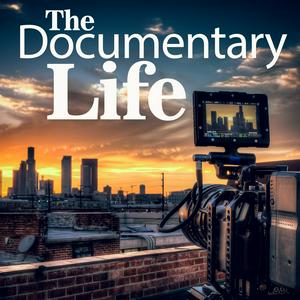
The Documentary Life is a podcast about building a life in nonfiction storytelling.
Hosted by documentary filmmaker Chris G. Parkhurst, the show explores what it really means to make documentaries—not just as a craft, but as a way of moving through the world with greater curiosity, observation, and empathy.
Each episode features thoughtful conversations with filmmakers, editors, cinematographers, producers, journalists, festival programmers, and other storytellers who have dedicated themselves to telling true stories. Together, we explore the creative process, the realities of production, the ethical questions that arise when working with real people, and the personal challenges of sustaining a meaningful creative life.
But The Documentary Life isn't only about cameras, funding, or film festivals.
It's about learning to listen more carefully. To sit with complexity instead of rushing toward certainty. To embrace uncertainty, contradiction, and the deeply human stories that exist all around us.
Whether you're directing your first short documentary, editing your tenth feature, producing independent nonfiction work, or simply someone drawn to authentic storytelling, this is a place for honest conversations about the rewards and realities of documentary filmmaking.
Expect interviews with accomplished filmmakers from around the world, practical discussions about craft and career, behind-the-scenes insights from real productions, and reflections on the philosophy of living a documentary life.
Because in the end, documentary filmmaking isn't simply about making films.
It's about paying attention.
Welcome to The Documentary Life.
Podcast-WebsiteHöre The Documentary Life, Leica Enthusiast Podcast - Fotopodcast mit Michel Birnbacher und viele andere Podcasts aus aller Welt mit der radio.de-App
Hol dir die kostenlose radio.de App
- Sender und Podcasts favorisieren
- Streamen via Wifi oder Bluetooth
- Unterstützt Carplay & Android Auto
- viele weitere App Funktionen
Hol dir die kostenlose radio.de App
- Sender und Podcasts favorisieren
- Streamen via Wifi oder Bluetooth
- Unterstützt Carplay & Android Auto
- viele weitere App Funktionen
The Documentary Life
Code scannen,
App laden,
loshören.
App laden,
loshören.
 Deutschland