
Höre diesen Podcast kostenlos in der App: Kostenlos im App Store laden
radio.de
Sleeptimer
Sender speichern
31 Episoden

Soft Skills Are Hard: Human Value in the Age of AI with Gopal Iyer
17.11.2026 | 31 Min.Gopal Iyer has spent two decades coaching senior leaders at Deloitte, EY, and Goldman Sachs through seasons of profound personal change. He’s the founder and director of Career Shifts Consulting, host of the Career Shifts podcast, and author of the new book The Other Half of Success. In this conversation with Paul Estes, Gopal describes the health wake-up call that made him ask himself who he would be without his Big Four title.
Paul and Gopal dig into why the “soft” skills are actually the hardest ones, and why workplaces have become transactional while still expecting transformation. They also get into why more AI may mean more loneliness. Paul shares his own move from college radio DJ to leaving big tech for freedom over his time. If you’ve ever felt successful on paper but empty in practice, this episode will help you decide what success means for you.
You’ll Learn:
The five questions every professional should be able to answer, starting with “Who am I?”
Gopal’s five-stage framework from The Other Half of Success: “Drift, Stir, Shift, Align, and Move”
Why workplaces have become so transactional, and why that blocks the transformation leaders say they want
How to build a portfolio career before a pink slip forces the issue
How one C-suite leader turned his career around by asking whether “behavioral issues” was the identity he wanted to carry
Why societal conditioning shapes how we see career breaks, layoffs, and success, and how to write your own story
Subscribe to the Expert Intelligence podcast so you don’t miss future conversations with leaders working through how careers, work and technology are changing. Each episode brings you practical insights for a fast-changing world.
Mentioned in the Episode:
The Other Half of Success by Gopal Iyer
Gopal’s Career Shifts podcast
Career Shifts Consulting
Gopal Iyer’s TEDx talk
Bowling Alone by Robert D. Putnam
Gig Mindset by Paul Estes
Producer: David Grabowski
Theme Music: Aleksey ChistilinYou're About to Automate Away Your Safety Net | with Tom Redman
22.10.2026 | 23 Min.Everyone’s racing to hand their work off to AI agents, but most corporate AI projects are failing, and bad data is a big reason why. Tom Redman, known as “The Data Doc,” built the first data quality lab at Bell Labs and has spent four decades in the least glamorous, most important part of the AI story: the data underneath it.
In this conversation, Tom explains why cleaning up bad data is a losing battle, and why the companies that win focus on the data they’ll create tomorrow instead. Plus, learn why line managers and AI experimentation rarely mix, how a “lab, factory, and bridge” structure fixes that, and why the customer-supplier model is the habit that separates real AI value from slop.
You’ll Learn:
Why data cleanup never works and how to fix bad data at the source
Why every AI project should start with the customer and what “good” looks like to them, not with data
How to run the Friday Afternoon Measurement to gauge your team’s data quality in a single afternoon
Why the only real AI transformation happens “between people’s ears”
The “lab, factory, and bridge” model for separating AI experimentation from day-to-day operations
Resources mentioned:
Tom’s book People and Data
Data Quality Solutions
The Friday Afternoon Measurement
The “bridge” concept from statistician Diego Kuonen (article written with Roger W. Hoerl and Thomas C. Redman)
Producer: David Grabowski
Theme Music: Aleksey Chistilin“If AI Slows You Down, You’re Using It Right” — with Stephen Klein
17.09.2026 | 29 Min.Stephen Klein, founder of Curiouser AI and a Berkeley lecturer, was one of the earliest voices calling out what he memorably termed "hype as a service,” the marketing machine promising that AI would replace us all.
In this sharp, contrarian conversation, Stephen explains why the AI job apocalypse is being "quietly canceled," why 95% of enterprise AI pilots have failed, and why the CFO has finally shown up to ask the questions that matter. Along the way, he reframes AI not as a magic productivity engine but as a trade, one where the thing we risk giving up is our own ability to think.
From the commoditization of large language models to the myth of a solo founder who built a $10M company alone, Stephen makes an optimistic case for what becomes scarce and valuable in the AI era. If you've ever felt "left behind" by AI or wondered whether the tools are actually helping you, this episode is a refreshing dose of clarity. As Stephen puts it, the future of work is still human, and the companies winning right now aren't smarter; they're just early.
You'll Learn:
Why AI was designed to perform tasks and be liked, not to help you think better, and what a tool built for curiosity looks like instead
Stephen's counterintuitive rule of thumb: if AI is slowing you down, you're probably using it right
Why large language models have become "the most expensive commodities in history,” and what that means for cost, competition, and open-source models
The truth behind the viral "solo founder" success stories and the "outlier problem" that makes everyone feel left behind
How companies are quietly rehiring after over-aggressive AI-driven layoffs, and why they're hiding it
Why creativity, judgment, trust, and imagination become your real competitive advantages in a world of commoditized intelligence
What Stephen would tell his own kids (and yours) about thriving in an increasingly entrepreneurial economy
Resources from this episode:
“Mira Murati's Design” — guest post by Stephen Klein on Substack
Stephen Klein’s Substack
Subscribe to the Expert Intelligence podcast so you don't miss future conversations with the leaders and thinkers shaping how we work, create, and lead in the age of AI. Each episode brings you practical insight to navigate our rapidly changing world.
Producer: David Grabowski
Theme Music: Aleksey ChistilinWriting Got Me Through Cancer. Then AI Threatened to Take It Away. — with Charlotte Davies and Edward Vitalis
16.06.2026 | 40 Min.Charlotte Davies has been a copywriter her whole life. She wrote through a cancer diagnosis alone in a Thai hospital. She wrote student newspapers as a kid. Writing is who she is. So when people started asking her whether AI was going to take her job, it didn't feel like a career question. It felt like an existential one.
In this conversation, recorded live with Edward Vitalis, CEO of Invictus Education Trust, Charlotte and Paul Estes go somewhere most AI conversations don't: what it actually feels like to be human in a world that's changing faster than we can process.
It's a conversation about what we risk losing if we're not paying attention, in our schools, in our families, and in ourselves. Paul shares why he's banned algorithmic content in his house (yes, including YouTube), Charlotte unpacks the unsettling idea that AI might be shrinking our world rather than expanding it, and Edward pushes both guests on what leaders and educators should actually do about it.
You'll Learn:
How Charlotte's cancer diagnosis in Thailand shaped everything she believes about human connection and creativity
The difference between using AI as a crutch versus using it as a catalyst, and why it matters more than most people think
What Paul means by "algorithmically infected" and why it's damaging friendships and family relationships
How the internet expanded the world, why AI has the potential to shrink it, and what to do about it
How AI's default settings (agreeable, symmetrical, smooth) are training us to accept a version of the world that isn't real
Paul's household rules around technology and the crucial distinction between consuming content and creating it
What leaders and educators should prioritize right now to build a genuinely human-first culture
Subscribe to Expert Intelligence so you don't miss future conversations with the innovators, operators, and thinkers shaping the future of work and technology.
Producer: David Grabowski | Theme Music: Aleksey ChistilinThe Job That Looks Perfect … but Feels Empty — with Ozlem Brooke Erol
21.04.2026 | 27 Min.Career coach and author Ozlem Brooke Erol spent years chasing the formula: good grades, impressive company name, solid title, only to feel completely hollow inside. In this candid conversation with Paul Estes, Brooke traces the history of work itself and makes the case that the systems are failing us, not the other way around. Her new book, You're More Than a Paycheck, is part permission slip, part workbook.
If you've ever woken up Sunday night with dread already setting in, this episode is for you.
You'll Learn:
Why the 9-to-5 was a historical experiment, not a permanent design for human flourishing, and what that means for your career today
The framework Brooke uses with clients to escape the either/or trap of financial necessity vs. meaningful work
How to walk the four paths to purpose, including the first steps anyone can take today
Why reflection is the most underused career tool, and the simple practices that make it accessible (even if sitting with discomfort feels impossible)
How limiting beliefs are inherited, invisible, and nearly impossible to spot without an outside perspective
What the Three Masons parable reveals about finding meaning in any job, even one you didn't choose
The one piece of advice Brooke would give her 25-year-old self about self-doubt (and why it applies to anyone at any career stage)
Subscribe to Expert Intelligence so you don't miss future conversations with the innovators, operators, and thinkers shaping the future of work and technology.
Producer: David Grabowski | Theme Music: Aleksey Chistilin
Weitere Marketing Podcasts




Trending Marketing Podcasts

Über Expert Intelligence with Paul Estes
The future is here, just not equally distributed.
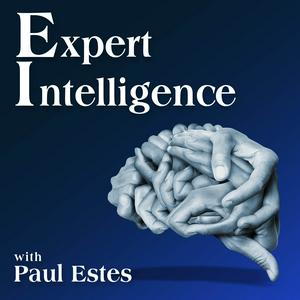
Join best-selling author and seasoned business leader Paul Estes in ”Expert Intelligence,” a bi-weekly podcast that focuses on the human-centric, AI-enabled approach to work, shedding light on key trends like the freelance revolution, the rise of generative AI and the changing dynamics of the workplace.
With over 20 years of leadership experience at giants like Microsoft, Dell, Amazon, and numerous venture-based startups, Paul brings a wealth of knowledge and a unique perspective. Whether you’re a business leader seeking guidance in this new era or an employee looking for inspiration and insights to navigate complex changes, this podcast is your go-to resource. Paul and his guests offer practical advice and thoughtful analysis to help you understand and adapt to these shifts, ensuring a healthy and productive journey in your professional life.
Tune in to ”Expert Intelligence” every other week for engaging, conversational, and insightful discussions that will empower you to stay ahead in the ever-changing world of work.
Podcast-WebsiteHöre Expert Intelligence with Paul Estes, OMR Podcast und viele andere Podcasts aus aller Welt mit der radio.de-App
Hol dir die kostenlose radio.de App
- Sender und Podcasts favorisieren
- Streamen via Wifi oder Bluetooth
- Unterstützt Carplay & Android Auto
- viele weitere App Funktionen

Expert Intelligence with Paul Estes: Zugehörige Podcasts
 Deutschland

