
Höre diesen Podcast kostenlos in der App: Kostenlos im App Store laden
radio.de
Sleeptimer
Sender speichern
250 Episoden
01 | The Agatha Christie Murder Club: Who was Agatha?
25.10.2026 | 17 Min.At the first meeting of The Agatha Christie Murder Club we investigate the life of Agatha Christie to find out what led to a lifetime of writing detective fiction. How did her failed ambitions as an opera singer force her to pivot? What really happened when she was the subject of her own missing persons case?
Also, Agatha Christie is officially the best-selling novelist of all time. She was the author of 66 detective novels, 14 short story collections and she wrote The Mousetrap, the world's longest running play. Did she revel in this fame or try to protect her privacy?
Laura Thomspon, author of Agatha Christie: A Mysterious Life, helps solve the case.
David Astle, the ABC's resident puzzle master has devised devious cryptic puzzles inspired by Agatha Christie's books. Each episode he'll provide a new clue and the answer will be the title of one of Agatha Christie's books.
Episode #1 Clue: Unsure hint? Delve on the rocks
David Astle will be back next time with the answer, and a new mystery for you to solve.
Email thebookshow@abc.net.au if you know the answer to the puzzle.
Find out more about the five-part series here.Why R.F. Kuang won't stay in the world of Yellowface
25.10.2026 | 23 Min.Is there any genre RF Kuang can't master? Her work continually surprises readers and for her latest novel, Taipei Story, she explains why she's shifted gears to tell a quiet story infused with subtle humour.
Taipei Story follows a Chinese American student trying to connect with her heritage while uncovering some confronting family secrets. The novel's origins lie in RF Kuang's own experience of attending an intensive Mandarin course in Taiwan when her grandfather died. As she describes to Claire Nichols, as well as mourning his loss, his death was a profound blow to her search for a meaningful connection with her Chinese heritage and she struggled to find the right language to express her feelings. And she wondered, how much harder it would be for a younger person from the diaspora seeking a link to their heritage?
Listen to Claire's interview with RF Kuang about Katabasis and Yellowface.
Love Agatha Christie mysteries? Dive into The Book Show's new series The Agatha Christie Murder Club as we solve mysteries about Christie, her books and legacy. Each week you'll have a chance to solve a cryptic puzzle devised by puzzle master, David Astle.
Relive your favourite moments of the Top 100 Books countdown. Download a printable Top 100 Australian Books 1-100 ranked and also, the list from 101-200.The Top 100 Australian Books afterparty
18.10.2026 | 54 Min.You voted, we counted and now we know: Tim Winton's Cloudstreet is our favourite-ever Australian book. In this Top 100 Australian Books afterparty we relive the highs, the lows and the controversies of the countdown.
Claire Nichols and Hilary Harper take a deep dive into conversations from The Book Show with your favourite Top 100 Books authors. Tim Winton reflects on how Cloudstreet saved him, Markus Zusak shares the stories that made The Book Thief and we hear from other favourites: Melissa Lucashenko on Too Much Lip and Charlotte McConaghy on Wild Dark Shore.
We also dig into the ABC archives for a 1987 interview with Sally Morgan on her seminal memoir, My Place.
Download a printable Top 100 Australian Books 1-100 ranked.
Relive your favourite moments of the weekend countdown.
Tune into our sister show, The Bookshelf, for the ones that got away (and the 101-200 list).
Donate to the Indigenous Literacy Foundation, our Top 100 Australian Books partner.
Top 100 Australian Books: Ranks 1–100
1. Cloudstreet by Tim Winton2. The Book Thief by Markus Zusak3. Boy Swallows Universe by Trent Dalton4. Burial Rites by Hannah Kent5. A Fortunate Life by A.B. Facey6. Tomorrow, When the War Began by John Marsden7. The Dictionary of Lost Words by Pip Williams8. The Narrow Road to the Deep North by Richard Flanagan9. The Secret River by Kate Grenville10. The Dry by Jane Harper
11. Possum Magic by Mem Fox and Julie Vivas12. Dark Emu by Bruce Pascoe13. Looking for Alibrandi by Melina Marchetta14. Year of Wonders by Geraldine Brooks15. The Slap by Christos Tsiolkas16. Wild Dark Shore by Charlotte McConaghy17. Storm Boy by Colin Thiele18. My Brilliant Career by Miles Franklin19. Magic Beach by Alison Lester20. Wifedom by Anna Funder
21. My Place by Sally Morgan22. The Australian Women's Weekly Children's Birthday Cake Book by Maryanne Blacker and Pamela Clark23. Stasiland by Anna Funder24. The Power of One by Bryce Courtenay25. Seven Little Australians by Ethel Turner26. Picnic at Hanging Rock by Joan Lindsay27. The Harp in the South by Ruth Park28. Mad Mabel by Sally Hepworth29. The Happiest Refugee by Anh Do30. My Brother Jack by George Johnston
31. Monkey Grip by Helen Garner32. Animalia by Graeme Base33. Breath by Tim Winton34. The Rosie Project by Graeme Simsion35. Lola in the Mirror by Trent Dalton36. Limberlost by Robbie Arnott37. I Can Jump Puddles by Alan Marshall38. Joe Cinque's Consolation by Helen Garner39. Big Little Lies by Liane Moriarty40. Oscar and Lucinda by Peter Carey
41. Dirt Music by Tim Winton42. The Complete Adventures of Snugglepot & Cuddlepie by May Gibbs43. People of the Book by Geraldine Brooks44. True History of the Kelly Gang by Peter Carey45. All That I Am by Anna Funder46. The Thorn Birds by Colleen McCullough47. Playing Beatie Bow by Ruth Park48. Where is the Green Sheep? by Mem Fox and Judy Horacek49. The Female Eunuch by Germaine Greer50. Mao's Last Dancer by Li Cunxin
51. The Light Between Oceans by M.L. Stedman52. Horse by Geraldine Brooks53. Stone Yard Devotional by Charlotte Wood54. Schindler's Ark by Thomas Keneally55. The Magic Pudding by Norman Lindsay56. The Cook's Companion by Stephanie Alexander57. The Lost Flowers of Alice Hart by Holly Ringland58. The Yield by Tara June Winch59. The Happiest Man on Earth by Eddie Jaku60. The Man From Snowy River by Banjo Paterson
61. Too Much Lip by Melissa Lucashenko62. Are We There Yet? by Alison Lester63. Question 7 by Richard Flanagan64. Damned Whores and God's Police by Anne Summers65. Chai Time at Cinnamon Gardens by Shankari Chandran66. Carpentaria by Alexis Wright67. Voss by Patrick White68. Unreliable Memoirs by Clive James69. A Town Like Alice by Nevil Shute70. Diary of a Wombat by Jackie French and Bruce Whatley
71. The Tree of Man by Patrick White72. This House of Grief by Helen Garner73. Scrublands by Chris Hammer74. The Fatal Shore by Robert Hughes75. The Bookbinder of Jericho by Pip Williams76. The Natural Way of Things by Charlotte Wood77. The Broken Shore by Peter Temple78. Power Without Glory by Frank Hardy79. Johnno by David Malouf80. For the Term of His Natural Life by Marcus Clarke
81. We of the Never-Never by Aeneas Gunn82. Eucalyptus by Murray Bail83. Wombat Stew by Marcia K Vaughan and Pamela Lofts84. Shantaram by Gregory David Roberts85. The Dressmaker by Rosalie Ham86. The Lost Man by Jane Harper87. The Trauma Cleaner by Sarah Krasnostein88. Juice by Tim Winton89. Edenglassie by Melissa Lucashenko90. Puberty Blues by Kathy Lette and Gabrielle Carey
91. Where the Forest Meets the Sea by Jeannie Baker92. The Tall Man by Chloe Hooper93. The Man Who Loved Children by Christina Stead94. The Spare Room by Helen Garner95. The Museum of Modern Love by Heather Rose96. RecipeTin Eats: Dinner by Nagi Maehashi97. Devotion by Hannah Kent98. The Arrival by Shaun Tan99. The 13-Storey Treehouse by Andy Griffiths and Terry Denton100. Round the Twist by Paul JenningsINTRODUCING — The Agatha Christie Murder Club
14.10.2026 | 2 Min.Before Knives Out, escape rooms and true-crime podcasts, there was Agatha Christie. The 'Queen of Crime' perfected the murder-mystery format and, 50 years after her death, we still can't get enough of her trailblazing take on cosy crime.
Each episode we solve a case together. What made her mysteries so propulsive? What happened when she was the star of her own missing-persons case? And would The Thursday Murder Club, or Only Murders in the Building exist, without Agatha Christie?
Plus, each episode we'll put your little grey cells to work with a cryptic puzzle brought to you by David Astle, the ABC's resident Puzzle Master.Min Jin Lee and Bonnie Garmus: After Pachinko and Lessons in Chemistry
11.10.2026 | 40 Min.The surprising Australian links in Min Jin Lee's latest novel American Hagwon. And Bonnie Garmus stresses the importance of poetry in Peck and Peck, the follow up to Lessons in Chemistry.
Why did it take ten years to write American Hagwon, the third novel exploring the Korean diaspora after Pachinko? Find out as Korean American author Min Jin Lee describes to Claire Nichols the ideas behind this family saga set just after the Asian financial crisis. The novel which centres on the sacrifices parents make to educate their children, but is also about expectations, class, migration and ultimately a celebration of family unity. While tackling the endemic Korean private cram academies called Hagwon, the story takes us to Korea, Sydney and California. And as a regular visitor to these shores, Min Jin Lee has some interesting conclusions about Australia's education and health systems.
And while Bonnie Garmus tells Claire Nichols the themes in her latest novel are very different from Lessons in Chemistry, the idea for Peck and Peck also came to her after a bad day at work. This time though it was a poem on the radio that sparked a story about a young man with an ear for identifying good poetry. And the complexities of twins.
Weitere Bücher Podcasts




Trending Bücher Podcasts





Über The Book Show
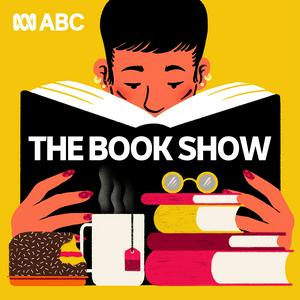
Your favourite fiction authors share the story behind their latest books.
Podcast-WebsiteHöre The Book Show, Mängelexemplar - der Literaturpodcast und viele andere Podcasts aus aller Welt mit der radio.de-App
Hol dir die kostenlose radio.de App
- Sender und Podcasts favorisieren
- Streamen via Wifi oder Bluetooth
- Unterstützt Carplay & Android Auto
- viele weitere App Funktionen
Hol dir die kostenlose radio.de App
- Sender und Podcasts favorisieren
- Streamen via Wifi oder Bluetooth
- Unterstützt Carplay & Android Auto
- viele weitere App Funktionen
The Book Show
Code scannen,
App laden,
loshören.
App laden,
loshören.
The Book Show: Zugehörige Podcasts
 Deutschland