

Höre diesen Podcast kostenlos in der App: Kostenlos im App Store laden
radio.de
Sleeptimer
Sender speichern
134 Episoden
The Jacobin Club and the Strange Monsieur Ripaud
13.10.2026 | 20 Min.As revolutionary chaos engulfed Paris, Tipu Sultan found himself isolated and searching for a lifeline after losing half his kingdom in 1792. This episode details the arrival of French privateer François Ripaud in Mangalore, the improbable establishment of the Jacobin Club of Srirangapatna, and how a bungled recruitment drive in Mauritius gave Governor-General Richard Wellesley the ultimate pretext to wage war on Mysore.
Key Details from the Script:
Impact of the French Revolution (1789–1793): The execution of Louis XVI in 1793 plunged France into political turmoil and brought war with Britain, leading to the surrender of Pondicherry in August 1793 and leaving France without a mainland port in India.
François Ripaud’s Deception (1797): French privateer François Ripaud arrived in Mangalore on a damaged ship, falsely claiming to be an official envoy from Île de France (Mauritius) promising 10,000 French troops and 30,000 African soldiers.
Overriding Government Assessments: All six Mysorean government departments that evaluated Ripaud’s claims submitted written reports declaring him a liar. Driven by desperate strategic hope, Tipu overrode his ministers, purchased Ripaud's ship, and approved a mission to Mauritius.
The Jacobin Club of Srirangapatna (May 1797): Fifty-nine French residents formed a republican club near Tipu's palace, raising the French tricolour flag and planting a Tree of Liberty. They swore an oath of hatred against all monarchs except "Citoyen Tipu," a title Tipu embraced to align with revolutionary France.
Malartic’s Disastrous Proclamation (1798): Upon reaching Port Louis in January 1798, Tipu's envoys found no ready army. Governor Malartic issued a public proclamation inviting volunteers to fight for Mysore, yielding only 99 men while publicly exposing Tipu's secret alliance.
Wellesley’s Pretext for War: On June 8, 1798, news of Malartic’s proclamation reached Governor-General Richard Wellesley in Calcutta. Wellesley leveraged the published document as definitive proof of a Mysorean-French military pact to justify parliament’s authorization for war.
We gratefully acknowledge the support of the Prestige Group, that makes this podcast possible.
Follow The History Of Bangalore on social, here:
Instagram: https://www.instagram.com/historyofbangalore/
Facebook: https://www.facebook.com/HistoryOfBangalore
Twitter: https://twitter.com/HistoryOfBLR
YouTube: https://youtube.com/@HistoryOfBangalore?si=mnH3BsYfI4BUU234
iHeartRadio: https://www.iheart.com/podcast/1323-the-history-of-bangalore-163453722/
Follow Ramjee Chandran on Instagram and Twitter: @ramjeechandran
The theme music for the show was composed by German-Indian Koln based percussionist, Ramesh Shotham. Ramjee Chandran's photos by Asha Thadani.
RESEARCH AND SOURCES: All our episodes are based on published research and archive records. To request information about our sources, write to hob@explocity.com. Let us know if you are a researcher (either institutional or independent) and also provide some information about why you need this information. Researchers will get priority. We only have time to engage serious, academic queries so please understand if we do not respond to casual requests.The French Connection, Part 2: France in Mysore
06.10.2026 | 20 Min.Despite being repeatedly abandoned by Paris due to European peace treaties, Tipu Sultan never relinquished his vision of a Franco-Mysore alliance to expel the British from India. This episode explores the pragmatic synergy between Mysore's land power and France's naval capabilities, the origin of Bengaluru's first European garrison in 1761, Admiral Suffren's 1782 naval campaign, and the deep cultural integration of French soldiers in Mysorean military life.
Key Details from the Script:
Pragmatic Synergy & Objectives: Mysore supplied standing armies, grain, bullocks, territory, land revenue, and western ports. France offered naval power to counter the Royal Navy, skilled artillery engineers, and strategic Indian Ocean staging grounds like Île de France (Mauritius).
Bengaluru’s First European Garrison (1761): Following the fall of Pondicherry in 1761, Hyder Ali hired 300 French hussars under Commander Hügel alongside arsenal craftsmen. Stationed in the Bengaluru pete, they established military workshops—forming the city's first European garrison nearly 50 years before the British Cantonment.
Admiral Suffren & The Bahour Summit (1782): French Admiral Pierre André de Suffren fought five major naval engagements against the British in under two years and seized Trincomalee. On July 25, 1782, Hyder Ali met Suffren with full state honors at Bahour near Pondicherry, accompanied by naval gun salutes.
Triple Abandonment by Paris: France prioritized European diplomacy over Mysore on three key occasions: the 1763 Treaty of Paris, the 1783 Treaty of Versailles (withdrawing Marquis de Bussy during Tipu's siege of Mangalore), and 1789 (when Louis XVI turned down Tipu's request for 10,000 troops).
Cultural Integration: Unlike British forces who remained isolated, French officers lived alongside Mysorean troops, learned local languages (Kannada, Tamil, Persian), wore Indian campaign clothes, and participated in court hunts.
French Rocks (Pandavapura / Kunti Betta): Located ~130 km southwest of Bengaluru, the granite hills of Pandavapura were historical encampments for French troops serving Mysore, featuring a preserved cemetery with around 30 worn 18th-century graves.
We gratefully acknowledge the support of the Prestige Group, that makes this podcast possible.
Follow The History Of Bangalore on social, here:
Instagram: https://www.instagram.com/historyofbangalore/
Facebook: https://www.facebook.com/HistoryOfBangalore
Twitter: https://twitter.com/HistoryOfBLR
YouTube: https://youtube.com/@HistoryOfBangalore?si=mnH3BsYfI4BUU234
iHeartRadio: https://www.iheart.com/podcast/1323-the-history-of-bangalore-163453722/
Follow Ramjee Chandran on Instagram and Twitter: @ramjeechandran
The theme music for the show was composed by German-Indian Koln based percussionist, Ramesh Shotham. Ramjee Chandran's photos by Asha Thadani.
RESEARCH AND SOURCES: All our episodes are based on published research and archive records. To request information about our sources, write to hob@explocity.com. Let us know if you are a researcher (either institutional or independent) and also provide some information about why you need this information. Researchers will get priority. We only have time to engage serious, academic queries so please understand if we do not respond to casual requests.The French Connection, Part 1: South India
01.10.2026 | 19 Min.Long before Britain consolidated its hold over the subcontinent, France came tantalizingly close to reshaping Indian history. In Part 1 of this mini-series, Ramjee Chandran traces the rise of La Compagnie des Indes Orientales, the kingmaking ambitions of Joseph François Dupleix, and the strategic innovations of the Marquis de Bussy—whose revenue-for-protection system provided the exact blueprint the British East India Company later used to conquer India.
Key Details from the Script:
French Expansion & Dupleix: Founded in 1664 by Jean-Baptiste Colbert, La Compagnie des Indes Orientales established key posts at Pondicherry, Chandernagore, Mahé, Yanam, and Karaikal. Under Governor Joseph François Dupleix (1742), France pivoted from trade to aggressive territorial kingmaking.
The Subsidiary Alliance Prototype: After the 1746 Battle of Adyar proved European tactics could scatter larger traditional armies, Dupleix raised trained sepoy units. In 1753, the Marquis de Bussy secured the Northern Circars revenue assignment from Hyderabad to maintain French troops—inventing the system later adapted by Richard Wellesley into the British Subsidiary Alliance.
The Tamil Pepys: The era’s political maneuvering was documented in detail by Dupleix’s dubash, Ananda Ranga Pillai, whose Tamil diary (1736–1761) provides a vivid eyewitness record of 18th-century South India.
First Mysore-French Military Pact (1760): During the Seven Years' War, Hyder Ali dispatched a force under his brother-in-law, Makhdum Ali, to aid French general Comte de Lally at Madras—marking the first joint military venture between Mysore and France.
European Priorities & British Supremacy: French ambitions were constantly undermined by European peace treaties (such as trading Madras back to Britain for Canada's Louisbourg in 1748) and British naval power, driving France to seek local land powers like Mysore.
We gratefully acknowledge the support of the Prestige Group, that makes this podcast possible.
Follow The History Of Bangalore on social, here:
Instagram: https://www.instagram.com/historyofbangalore/
Facebook: https://www.facebook.com/HistoryOfBangalore
Twitter: https://twitter.com/HistoryOfBLR
YouTube: https://youtube.com/@HistoryOfBangalore?si=mnH3BsYfI4BUU234
iHeartRadio: https://www.iheart.com/podcast/1323-the-history-of-bangalore-163453722/
Follow Ramjee Chandran on Instagram and Twitter: @ramjeechandran
The theme music for the show was composed by German-Indian Koln based percussionist, Ramesh Shotham. Ramjee Chandran's photos by Asha Thadani.
RESEARCH AND SOURCES: All our episodes are based on published research and archive records. To request information about our sources, write to hob@explocity.com. Let us know if you are a researcher (either institutional or independent) and also provide some information about why you need this information. Researchers will get priority. We only have time to engage serious, academic queries so please understand if we do not respond to casual requests.How Tipu Almost Destroyed Business in the Bengaluru Pete
22.09.2026 | 21 Min.While Tipu Sultan was driven to construct a modern, self-reliant industrial power, his domestic economic policies caused severe disruption for the merchant community of the Bengaluru Pete. Drawing from surveyor Francis Buchanan's 1800 records, this episode examines how trade bans, state monopolies under the Malik-ut-Tujjar, the abolition of private banking, forced state purchases, and an armed thorn hedge enclosure threatened the 250-year-old open marketplace.
Key Details from the Script:
Francis Buchanan’s 1800 Survey: Primary accounts of Tipu’s economic administration were documented by British surveyor Francis Buchanan in May 1800, capturing the grievances of Pete merchants following the fall of Mysore.
The Canteroy Pagoda (Kanteeraya Varaha): Though coins from across India circulated in the Pete, bookkeeping was standardized in the Kanteeraya varaha, a currency introduced in 1638 by Ranadheera Kanteerava Narasaraja Wadiyar I that persisted until the British standardized the Rupee.
Moral Controls & Regional Trade Bans: Reversing Hyder Ali’s laissez-faire policies, Tipu banned liquor, white poppy, and hemp cultivation. He also prohibited trade with Arcot and Hyderabad—disrupting key silk, cotton, and export markets.
State Monopolies & Financial Control: Essential commodities—sandalwood, pepper, tobacco, cardamom, gold, silver, and sulphur—were nationalized under the Malik-ut-Tujjar (chief of commerce). Tipu also abolished private banking and independent brokers (Shettys), centralizing hundi paper credit under state offices.
Forced Purchases & The Thorn Barrier: Merchants were forced to purchase state surplus goods at above-market prices, draining private capital. Furthermore, an armed thorn hedge enclosure was built around the Pete, restricting free movement and movement of goods in a historically open market town.
We gratefully acknowledge the support of the Prestige Group, that makes this podcast possible.
Follow The History Of Bangalore on social, here:
Instagram: https://www.instagram.com/historyofbangalore/
Facebook: https://www.facebook.com/HistoryOfBangalore
Twitter: https://twitter.com/HistoryOfBLR
YouTube: https://youtube.com/@HistoryOfBangalore?si=mnH3BsYfI4BUU234
iHeartRadio: https://www.iheart.com/podcast/1323-the-history-of-bangalore-163453722/
Follow Ramjee Chandran on Instagram and Twitter: @ramjeechandran
The theme music for the show was composed by German-Indian Koln based percussionist, Ramesh Shotham. Ramjee Chandran's photos by Asha Thadani.
RESEARCH AND SOURCES: All our episodes are based on published research and archive records. To request information about our sources, write to hob@explocity.com. Let us know if you are a researcher (either institutional or independent) and also provide some information about why you need this information. Researchers will get priority. We only have time to engage serious, academic queries so please understand if we do not respond to casual requests.The Famous Mysore Silk: How it Happened
16.09.2026 | 21 Min.How did a kingdom stripped of its primary commercial ports transform itself into an industrial powerhouse? In this episode, Ramjee Chandran traces the origin of two defining Mysorean legacies: silk and lacquerware toys. From 12-year expeditions sent to China for silkworms to treadmill-pumped mulberry fields outside Bengaluru's old city gates, discover how Tipu Sultan built a closed-loop textile ecosystem and laid the foundation for modern Karnataka's sericulture industry
Key Details from the Script:
1786 Sericulture Expeditions: Tipu Sultan dispatched diplomatic missions to China (lasting 12 years) and Bengal (lasting 4 years) to procure silkworms and expert reelers. On September 26, 1786, Tipu wrote to Syed Mahommed, commandant of Srirangapatna fort, ordering temporary housing for the incoming Bengal silkworms near the old palace to commence breeding.
Hyder Ali’s Early Foundations: Sericulture in Mysore began under Hyder Ali prior to 1782. Artisans brought from Uraiyur (Trichy) and roughly 300 reelers from Bengal established bamboo mounting frames and silk-reeling techniques at Srirangapatna.
Global Trade & Sourcing: Letters from April and May 1786 show Tipu directing Mir Kazim, manager of the Muscat trade post in Oman, to collect silkworms, Persian saffron seeds, and pearls from Bahrain and Hormuz.
The Bengaluru Supply Chain: Outside the eastern Halasooru Gate near Sampangi Tank (modern Sampangirama Nagar), human-powered treadmills pumped lake water to cultivate mulberry bushes. These crops fed silkworm breeding units that supplied raw thread directly to looms inside the Bengaluru pete.
Refuting the Colonial "Failure" Narrative: British translator William Kirkpatrick (1811) dismissed Tipu’s sericulture project as "unsuccessful". In reality, the imported yellow silkworm adapted to the local climate without hibernating, producing the resilient "Pure Mysore race" that anchors modern silk production.
Long-Term Industry Evolution: The Channapatna-Srirangapatna corridor became Mysore’s permanent silk belt. It was expanded later by Italian entrepreneur de Vecchi (Kengeri filature, 1866) and Jamsetji Tata (Tata Silk Farm in Basavanagudi, 1896).
Channapatna Manufacturing Hub: Beyond sericulture, Channapatna transitioned from metal and precision crafting—such as veena strings—into the famous lacquerware toy manufacturing town that exists today.
We gratefully acknowledge the support of the Prestige Group, that makes this podcast possible.
Follow The History Of Bangalore on social, here:
Instagram: https://www.instagram.com/historyofbangalore/
Facebook: https://www.facebook.com/HistoryOfBangalore
Twitter: https://twitter.com/HistoryOfBLR
YouTube: https://youtube.com/@HistoryOfBangalore?si=mnH3BsYfI4BUU234
iHeartRadio: https://www.iheart.com/podcast/1323-the-history-of-bangalore-163453722/
Follow Ramjee Chandran on Instagram and Twitter: @ramjeechandran
The theme music for the show was composed by German-Indian Koln based percussionist, Ramesh Shotham. Ramjee Chandran's photos by Asha Thadani.
RESEARCH AND SOURCES: All our episodes are based on published research and archive records. To request information about our sources, write to hob@explocity.com. Let us know if you are a researcher (either institutional or independent) and also provide some information about why you need this information. Researchers will get priority. We only have time to engage serious, academic queries so please understand if we do not respond to casual requests.
Weitere Geschichte Podcasts










Trending Geschichte Podcasts














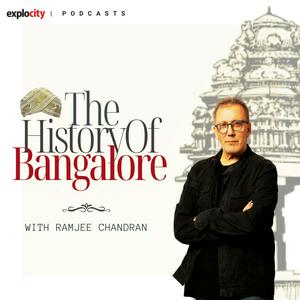
Über The History Of Bangalore
"The History of Bangalore" explores Bangalore's evolution from its early beginnings in the 4th century AD, from the dynasties of the Kadambas and the Gangas, through the eras of princely rule, the rise of the British Raj, and ultimately, the dawn of Indian independence in 1947.
Join us as we uncover the power struggles, alliances, and battles that shaped this dynamic city.
Expect a captivating blend of scholarly research and engaging storytelling. We'll delve into the reigns of powerful kings, the rise and fall of empires, and the events that forged Bangalore into the prominent city it is today.
Whether you're a history buff or simply curious about Bangalore's roots, this podcast is for you.
We gratefully acknowledge the support of the Prestige Group, that makes this podcast possible.
Follow The History Of Bangalore on social, here:
Instagram: https://www.instagram.com/historyofbangalore/
Facebook: https://www.facebook.com/HistoryOfBangalore
Twitter: https://twitter.com/HistoryOfBLR
YouTube: https://youtube.com/@HistoryOfBangalore?si=mnH3BsYfI4BUU234
You can follow Ramjee Chandran on Instagram and Twitter: @ramjeechandran
The theme music for the show was composed by German-Indian Koln based percussionist, Ramesh Shotham.
Ramjee Chandran's photographs: Asha Thadani
Podcast-WebsiteHöre The History Of Bangalore, WDR Zeitzeichen und viele andere Podcasts aus aller Welt mit der radio.de-App
Hol dir die kostenlose radio.de App
- Sender und Podcasts favorisieren
- Streamen via Wifi oder Bluetooth
- Unterstützt Carplay & Android Auto
- viele weitere App Funktionen
Hol dir die kostenlose radio.de App
- Sender und Podcasts favorisieren
- Streamen via Wifi oder Bluetooth
- Unterstützt Carplay & Android Auto
- viele weitere App Funktionen

The History Of Bangalore
Code scannen,
App laden,
loshören.
App laden,
loshören.
 Deutschland