
Höre diesen Podcast kostenlos in der App: Kostenlos im App Store laden
radio.de
Sleeptimer
Sender speichern
180 Episoden
Cheerful Pessimist: The Life and Legacy of Richard Heinberg
21.10.2026 | 53 Min.On July 19, 2026 the world lost a 5’11”, 150 pound giant of intellect and compassion… Richard Heinberg. Richard was a prolific writer, speaker, educator, musician, and a gentle soul – none of which applies to your Crazy Town hosts. Jason, Rob, and Asher gather in the studio for the first time since Richard’s passing to commiserate, reflect on his legacy, and talk about how to keep his work and ethos alive. There’s no way to replace Richard, but we can all aspire to be a little more like him and steer things toward kindness, intelligence, justice, and simple living.
Originally recorded on 10/1/26 with archival episodes.
Sources & Links
RichardHeinberg.com
Asher’s post announcing the news
Legacy page, with info on how to add live Celebration of Life to calendar
EverLoved website, where listeners can read tributes and share their own
Richard’s widow, Janet’s, GoFundMe
Richard’s articles on what he learned from chickens, why the blues should be our national anthem; and fountain pen as bellweathers
300 Years of Fossil Fuels in 300 Seconds
Richard’s free online course, Think Resilience
Post-Carbon Music, Richard’s speech and musical performance at the New England Conservatory of Music
Credits
Production and editing by Alex Leff. Editorial assistance and transcripts by Taylor Antal.
Theme music is “Way Huge” and “Don’t Give Up” by Midnight Shipwrecks, used with permission.
Thanks to all the Crazy Townies, our listeners who are trying to understand humanity's overshoot predicament and do something about it.Finding Crazy Town Part 6: Facing the Future
07.10.2026 | 41 Min.What would it actually mean to live with less? From World War II rationing to the possibility of a contracting economy, the search explores what happens when a civilization built on endless expansion runs up against ecological limits. And if we're forced to power down, can we preserve the things we value most—health, human rights, cultural diversity, individual freedom—without preserving the system that created them?
In Part 6 of our six-part series, Finding Crazy Town, producer Alex Leff reaches the final stop in his investigation into the mysterious disappearance of Jason Bradford, Rob Dietz, and Asher Miller. After following clues through global trade, complexity, economic growth, progress, and the adaptive cycle, Alex finally looks in the one place he hasn't searched yet: the future.
Originally recorded on 9/11/26 with archival episodes.
Related Episodes
Episode 19, “I Can’t Drive… 35! The Rationale for Rationing”
Episode 27, “Poked by a Porcupine: the Politics of Contraction”
Credits
Production and editing by Alex Leff. Editorial assistance and transcripts by Taylor Antal.
Theme music is “Way Huge” and “Don’t Give Up” by Midnight Shipwrecks, used with permission.
Thanks to all the Crazy Townies, our listeners who are trying to understand humanity's overshoot predicament and do something about it.Finding Crazy Town Part 5: Adapting to the Adaptive Cycle
23.09.2026 | 43 Min.What if collapse isn't the end of the story but part of a larger cycle?
In Part 5 of our six-part summer series, Finding Crazy Town, producer Alex Leff continues his investigation into the mysterious disappearance of Jason Bradford, Rob Dietz, and Asher Miller. Following clues from the Crazy Town archives leads to the adaptive cycle: a framework from ecology that describes how complex systems move through growth, maturity, collapse, and reorganization.
From the Titanic and lifeboats to Ernest Shackleton's Antarctic expedition, the search turns toward a more difficult question: How do we navigate a period of contraction while building something more just, sustainable, and resilient on the other side?
Originally recorded on 9/10/26 with archival episodes.
Related Episodes
Episode 25, “Koala Butts Ablaze and the Sweet Relief of the Adaptive Cycle”
Episode 26, “Doors and Deck Chairs on the Titanic: Reimagining Lifeboat Ethics in the Age of Overshoot”
Credits
Production and editing by Alex Leff. Editorial assistance and transcripts by Taylor Antal.
Theme music is “Way Huge” and “Don’t Give Up” by Midnight Shipwrecks, used with permission.
Thanks to all the Crazy Townies, our listeners who are trying to understand humanity's overshoot predicament and do something about it.Finding Crazy Town Part 4: The Myth of Progress - Are We There Yet?
09.09.2026 | 31 Min.What if the story we tell ourselves about progress is wrong?
In Part 4 of our six-part summer series, Finding Crazy Town, producer Alex Leff continues his investigation into the mysterious disappearance of Jason Bradford, Rob Dietz, and Asher Miller. Following clues from the Crazy Town archives, Alex begins questioning one of the most deeply held assumptions of modern society: that history is a story of continual progress.
From rising life expectancy and GDP to expanding material wealth and technological innovation, there are plenty of reasons to believe things are getting better. But where did this idea of progress come from? And what happens when the energy and resources required to keep progressing begin to run up against the limits of the natural world?
Along the way, Alex follows the trail from the Enlightenment and fossil fuels to techno-optimism, Jeff Bezos, cargo cults, and the dangerous belief that technology will always come to the rescue. Maybe the problem isn't that we're failing to make progress. Maybe it's that we're asking the wrong question altogether.
And if Jason, Rob, and Asher aren't looking for a ladder to the future, where exactly could they have gone?
The search continues.
Originally recorded on 8/19/26 with archival episodes.
Related Episodes
Episode 9, “They’ll Think of Somethingisms”
Episode 39, “The Myth of Progress and Limits to Growth, or… the Story of the World’s Largest Shovel”
Credits
Production and editing by Alex Leff. Editorial assistance and transcripts by Taylor Antal.
Theme music is “Way Huge” and “Don’t Give Up” by Midnight Shipwrecks, used with permission.
Thanks to all the Crazy Townies, our listeners who are trying to understand humanity's overshoot predicament and do something about it.Finding Crazy Town Part 3: Unlimited Limits to Growth
26.08.2026 | 47 Min.Can our economy keep growing forever on a finite planet?
In this third installment of Finding Crazy Town, we explore the idea of exponential economic growth, why economists and politicians have become so committed to it, and what happens when our economic models fail to account for the environmental systems that make the economy possible.
Along the way, Jason, Rob, and Asher revisit the problems they see in conventional economics, Jason recounts the experience that sent him down the rabbit hole of Limits to Growth and ecological economics, and the trio asks whether growth and progress really mean the same thing.
From Robert Wadlow to Ronald Reagan, Donella Meadows to Julian Simon, the IPCC to the three musketeers, we follow the clues—and discover that sometimes limits aren't the enemy of creativity. They’re what make creativity possible.
Originally recorded on 7/21/26 with archival episodes.
Related Episodes
Episode 2, “Punching Ronnie in the Mouth”
Episode 8, “Mosquito-Flavored Popcorn, or What Climate Scientists Are Getting Wrong”
Credits
Production and editing by Alex Leff. Editorial assistance and transcripts by Taylor Antal.
Theme music is “Way Huge” and “Don’t Give Up” by Midnight Shipwrecks, used with permission.
Thanks to all the Crazy Townies, our listeners who are trying to understand humanity's overshoot predicament and do something about it.
Weitere Geowissenschaften Podcasts




Trending Geowissenschaften Podcasts

Über Crazy Town
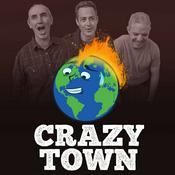
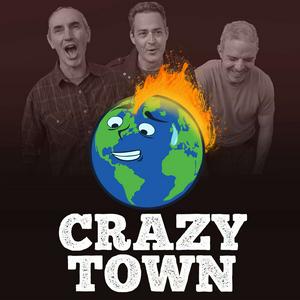
With equal parts humor and in-depth analysis, Asher, Rob, and Jason safeguard their sanity while probing crazy-making topics like climate change, overshoot, runaway capitalism, and why we’re all deluding ourselves. Each fortnightly episode helps you understand the “Great Unraveling” of our environmental and social systems and describes how we can make the transition to a sustainable and equitable world. If you’re someone who questions the trajectory of society and struggles to understand why most people would rather eat nachos on the deck of the “SS Denial” than face reality, you’ll find community and plenty of laughs in Crazy Town.
Brought to you by https://www.resilience.org/ and the unconventional minds at Post Carbon Institute, a nonprofit think tank that builds awareness of the polycrisis and prescribes community resilience-building as the most appropriate response.
Your hosts:
Asher Miller - Nonprofit executive director by day, apocalypse comedian by night. Feels most at home exploring insanity-inducing topics while trying not to spill coffee on his keyboard as he convulses over the latest ecomodernist fantasy. In danger of losing his mind every time he encounters someone using a gas-powered blower to move leaves from one spot to another.
Rob Dietz - Jack-of-all-trades environmental scientist, conservation biologist, and ecological economist with a penchant for relating planetary overshoot to the catalog of movie scenes that play on a continuous loop in his colonized brain. Known for inserting random ecological facts into casual conversation, often in Arnold Schwarzenegger’s voice. His friends call him “pessimistically hilarious.”
Jason Bradford - Activist farmer and former encyclopedia salesman with a PhD in plant ecology who gets genuinely excited discussing soil microbes and societal collapse in the same breath. Morally opposed to doomsday prepping, but predisposed toward sharing everything he keeps in his bunker, er root cellar, including potatoes, wine, and a 47-month supply of scientific esoterica and embarrassing anecdotes.
These guys are the Three Stooges of sustainability podcasting, although they tend toward scientific analysis, righteous outrage, and self-deprecation rather than beating each other up with hand tools. How can they have this much fun while contemplating collapse and navigating the Great Unraveling?
Heartfelt thanks to the team at Post Carbon Institute, our volunteers, and all our fellow Crazy Townies out there who help bring this podcast to life.
Podcast-WebsiteHöre Crazy Town, Erde und Umwelt und viele andere Podcasts aus aller Welt mit der radio.de-App
Hol dir die kostenlose radio.de App
- Sender und Podcasts favorisieren
- Streamen via Wifi oder Bluetooth
- Unterstützt Carplay & Android Auto
- viele weitere App Funktionen
Hol dir die kostenlose radio.de App
- Sender und Podcasts favorisieren
- Streamen via Wifi oder Bluetooth
- Unterstützt Carplay & Android Auto
- viele weitere App Funktionen

Crazy Town
Code scannen,
App laden,
loshören.
App laden,
loshören.
 Deutschland