
Höre diesen Podcast kostenlos in der App: Kostenlos im App Store laden
radio.de
Sleeptimer
Sender speichern
370 Episoden
Songshan Airport: Ninety Years in the Heart of Taipei – S6-E32
22.10.2026 | 25 Min.Opened by the Japanese in 1936, Taipei's Songshan Airport has witnessed wartime bombing raids (by aircraft piloted by both Soviet and American pilots), Cold War diplomacy, and tearful family farewells. During the Cold War, it welcomed some of America's most powerful political figures; President Eisenhower landed here to a spectacular welcome in 1960. For decades, Songshan was Taiwan's main international gateway, until the opening of Chiang Kai-shek International Airport (now Taoyuan International Airport) in 1979. It reinvented itself as a busy domestic hub, only to be dealt another blow by high-speed rail. Yet Songshan survived, and today it offers convenient flights to cities in China, Japan, and South Korea. As Taipei once again debates whether to close the airport and redevelop its valuable land, Eryk and John look back at ninety years of aviation history.
Image via Japanese travel blogLin Yutang: The Importance of Living – and Coming Home to Taiwan – S6-E31
15.10.2026 | 28 Min.Writer, philosopher, linguist, inventor – Lin Yutang (林語堂) was one of the most famous Chinese intellectuals of the twentieth century, and for decades one of the people most responsible for explaining Chinese culture to English-speaking readers. His My Country and My People introduced millions of Western readers to China, while The Importance of Living preached the virtues of leisure, humor and occasionally doing absolutely nothing. After three decades abroad, the Fujian-born Lin came to Taiwan in 1966. In his final years, living in his beautiful Yangmingshan home overlooking Taipei, he wrote about the small pleasures that made his years in Taiwan among the happiest of his life.Abacus: A Grandfather’s Journey from China to Taiwan – S6-Bonus
11.10.2026 | 33 Min.When his grandfather died during the COVID pandemic, Hudson Wei realized how little he knew about the man who had raised him. Determined to uncover his story, he interviewed relatives, pieced together family memories, and eventually turned this into a historical novel, Abacus.
Hudson joins John from California to discuss this multigenerational saga. They begin with his grandfather’s journey from war-torn Wuhan, China, to Pingtung, Taiwan, in 1946. They then follow him to Yuanlin in central Taiwan, where he nearly lost his life during the 228 Incident of 1947. Later, in Taipei, he became involved with the mysterious Bai Tuan (White Group), a secretive organization of former Japanese military officers.
John and Hudson also discuss immigration to the United States and the complicated family relationships that inspired him to turn his family history into fiction. (BTW, some listeners might know Hudson as Leeway (藍力威) from his time with the Taiwanese-American pop group Cool Silly (傻酷, Shǎ Kù).)Andō Momofuku: Was the Inventor of Instant Noodles Taiwanese? – S6-E30
08.10.2026 | 35 Min.Andō Momofuku is a household name in Japan, celebrated as the inventor of instant noodles. But his story actually begins in Puzi, a small town in southern Taiwan, where he was born Wu Baifu in 1910. John is joined by Tom Gibb, a Japan-based translator and author of the cycling travelogue Charinko. Together they unravel the complicated history of the man and his noodles. Going behind the familiar mythology, they explore his Taiwanese childhood, early business career, wartime troubles, an interesting family life (as in multiple wives), business failures, and the experiments that finally produced instant ramen. They also tackle a trickier question: did Andō really invent instant noodles?
If you’d like to hear more from John and Tom about Tom’s Japan cycling adventures, you can listen to their two companion conversations: one on the Books on Asia podcast and another on Bookish Asia with Plum Rain Press. The two episodes explore different sides of the journey and of life in Japan.
Books on Asia episode
Bookish Asia with Plum Rain Press podcast pageTaiwan at the Asian Games – and the World Games Triumph of 2009 Asian Games – Snack 10
03.10.2026 | 21 Min.NOTE: People not using Spotify can watch this video on YouTube.
As the 2026 Asian Games in Japan come to a close, Eryk and John look back at Taiwan’s sporting struggles and successes in Asia. Who knew that the country has long been a powerhouse in soft tennis and women’s tug-of-war? After multiple unsuccessful bids to host the Asian Games, Taiwan finally had its chance to put on a show: the 2009 World Games in Kaohsiung. We revisit this breakthrough event, which featured some fascinating sports (anyone heard of korfball or canoe polo?) and plenty of Taiwanese flavor.
Weitere Geschichte Podcasts










Trending Geschichte Podcasts


























Über The Taiwan History Podcast: Formosa Files
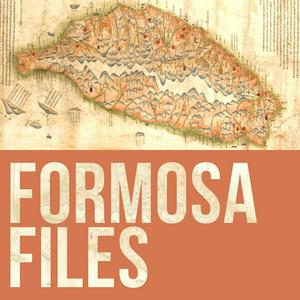
Formosa Files is the world's biggest and highest-rated Taiwan history podcast. We use an engaging storytelling format and are non-chronological, meaning every week is a new adventure - and, you can just find a topic that interests you and check out that episode...skip stuff that isn't your thing. The hosts are John Ross, an author and publisher of works on Taiwan and China, and Eryk Michael Smith, a journalist for local and global media outlets. Both Ross and Smith have lived in Taiwan for over two decades and call the island home.
Email: formosafiles@gmail.com
Podcast-WebsiteHöre The Taiwan History Podcast: Formosa Files, Was bisher geschah - Geschichtspodcast und viele andere Podcasts aus aller Welt mit der radio.de-App
Hol dir die kostenlose radio.de App
- Sender und Podcasts favorisieren
- Streamen via Wifi oder Bluetooth
- Unterstützt Carplay & Android Auto
- viele weitere App Funktionen
Hol dir die kostenlose radio.de App
- Sender und Podcasts favorisieren
- Streamen via Wifi oder Bluetooth
- Unterstützt Carplay & Android Auto
- viele weitere App Funktionen

The Taiwan History Podcast: Formosa Files
Code scannen,
App laden,
loshören.
App laden,
loshören.
The Taiwan History Podcast: Formosa Files: Zugehörige Podcasts
 Deutschland